There is a short stretch on one of my regular cycle routes –
from central London down to the Canary Wharf financial
district – that always reminds me of Boris Johnson, London’s mayor. I
found myself riding there one morning three years ago with the mayor, who’s up
for re-election this Thursday. He had spotted me overtaking him on my bike as
we both cycled away from Canary Wharf after an early morning
press event. Having become snarled in unpleasant, heavy traffic on the way to CanaryWharf,
he asked if I knew a better route back. Given both human sympathy and the
opportunity to bore my city’s leader with my views on his cycling policies, I
naturally agreed.
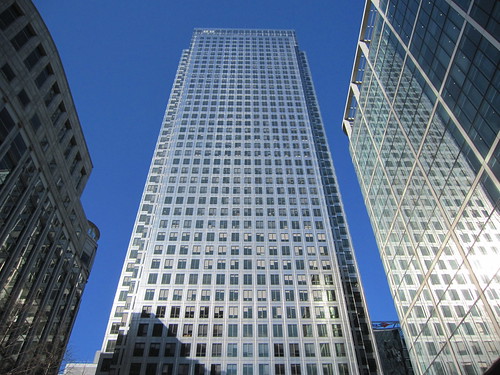 |
| Canary Wharf: start of my historic bike ride |
But, as we cycled through Limehouse near the Rotherhithe
Tunnel entrance, the mayor became agitated. The route I was following – part of
the London Cycle Network initiated under Ken Livingstone, his predecessor -
started to bend round to face back towards Canary Wharf. “We’re doubling back
on ourselves!” the mayor exclaimed. Sure enough, when the route we were
following was subsequently revamped as part of the mayor’s Cycle Superhighways
programme, the brief double-back was eliminated, to be replaced with an awkward
contraflow cycle path down the wrong side of a one-way street. I always wonder
whether our ride produced it.
The incumbent London London ’s busiest roads
and of an on-street cycle hire scheme based on Paris
But Ken Livingtone, who’s standing again and is likely to be
the mayor’s closest opponent, sometimes seems to feel positively hostile
towards cyclists, even if his administration benefitted those of us on two
wheels. I’ve recounted in a previous post how I once asked him, while mayor,
what he would do to combat anti-cylist hostility. I told him how, a few days
before, I’d had a young man aim a punch at me while cycling, in the hope of
making me fall off. “I’ve often felt
like punching a journalist myself,” he droned back. He went on to recount the
obviously sad but clearly unrepresentative of a young man in Brent who had
seriously hurt an old woman while cycling.
The question consequently is whether a cycling London
The question raises issues that go well beyond London
 |
| London cyclists gather for the Big Ride: aspirational figures |
Nevertheless, the Invisible Visible Boy, four, and myself
were keen to show there are large numbers of cyclists in London London
Yet the event swarmed with political activists who thought
cyclists would be easy recruits to their wider causes. The Green Party was very
clearly in evidence, suggesting their candidates were the only true friends of
cycling. I even, depressingly, saw a high-vi vest advertising the Morning Star,
“Daily Paper of the Left”. I prayed a silent prayer that cycling wasn’t as
doomed as the Morning Star’s Communism. It’s just a blessing the event was too
bourgeois for the Socialist Worker contingent customary around any progressive London
Other groups, meanwhile, prodded us towards identity
politics. Londoners on Bikes distributed copious numbers of leaflets demanding
we vote with our bikes. The Invisible Visible Girl, 10, expressed particular
bemusement about how that might be accomplished.
The choices seemed clear. Cyclists were either political
animals who just happened to arrive at the leftish party meetings on two
wheels. Or we were apolitical animals picking and choosing candidates according
to the number of bike hire stations they’d put in or the speed they’d let cars
drive.
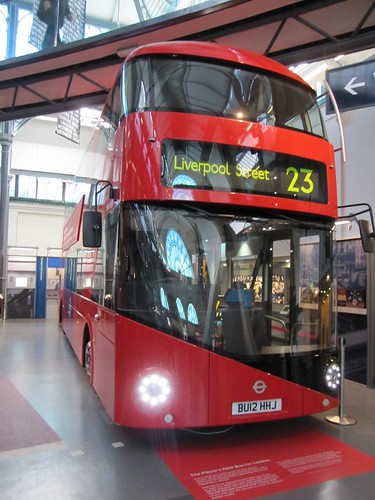 | |
| Open platform danger: the new bus |
There are even subjects outside transport policy. One of the
more sobering bike rides I’ve undertaken in the past year was a ride home from
central London in the early evening of August 8 last year, the worst night of
the rioting that erupted all over the city as a result of a whole range of
issues, ranging from anger at the police’s behaviour to straightforward greed. Antipathy
towards rioters might lead one to support Brian Paddick, the Liberal Democrat
candidate, an ex-policeman who has campaigned as a crime-fighter. Is someone
voting with their bike allowed to consider how a candidate’s propensity or
otherwise to incite riots might affect cycling conditions? And are we allowed
to consider how most fellow policemen probably regarded Commander Paddick a
dangerous liberal for his tolerance of soft drugs in his area? Are we allowed
to consider how Ken Livingstone’s sympathetic statements about some islamist
radicals might relate to the threat of terrorism?
 |
| These Big Riders' children can grow up eccentric - but not dumb |
The truth, of course, is that nearly all cyclists, save a
fanatical few, rightly vote on a far broader range of issues than a narrow
“vote bike” position. The mostly middle-class parents present at the Big Ride
didn’t, for example, seem to want their children to grow up stupid thanks to
lacklustre education. Nor are many of them likely to have felt comfortable
either with a mayor – like Ken Livingstone – who sounds increasingly cranky or
the foppish incumbent who describes the £250,000 he earns annually for his
newspaper column as “chickenfeed”. There ought surely to be space for someone
like me who can marvel at the free market’s ability to deliver marvellous bicycle products but still feel lefty bleeding-heart concern over nearly
everything.
Very few of us cycle as part of an overall, hard-left political position. Many cyclists may be woolly liberal muesli-munchers. But we
can surely comfort ourselves that we’re not single-mindedly obssessed
woolly-minded liberal muesli-munchers.
Which brings us to how I actually cast my postal vote (since
I’m currently in Leipzig
 |
| The Invisible Visible Man Votes - with clothespeg |
That leaves only the question of the fate of my partner in
the Historic Bike Ride from Canary
Wharf
The incident reminded me of part of our ride back from Canary Wharf Cable Street
The mayor may, when the votes are counted on Friday evening, have cause to look
similarly ruefully back on his campaign - and wonder where all those
stereotypical cyclists’ votes have gone.
