During a brief stop-off on Wednesday morning at Brixton Cycles, I fell into the kind of chit-chat that’s a customary part of any healthy relationship with a cycle retailer. Recalling that the staff member serving me had previously complained about cycling conditions on Westminster Bridge, I remarked to him on the news that Transport for London is due to start installing protected bike paths on either side of the crossing.
“It’s good news about Westminster Bridge, isn’t it?” I’d asked.
“It’s good news about Westminster Bridge, isn’t it?” I’d asked.
 |
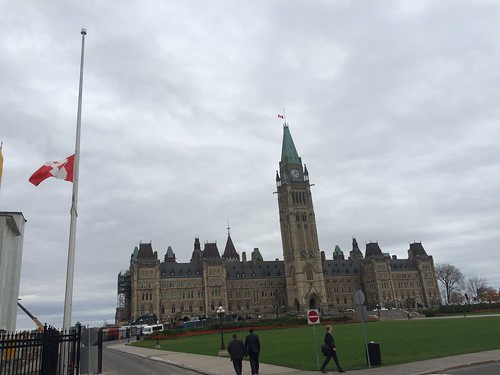
| The parliamentary clock tower: tourist icon turned site of terror |
The comment was to appear darkly ironic within hours, after Khalid Masood, a convert to Islam, deliberately drove a vehicle at pedestrians on the bridge, killing three, before fatally attacking a policeman guarding the Houses of Parliament. Masood was himself fatally shot following his attack.
I’ve had particular cause to ponder my comment, however, because following the attack I was called away from my normal reporting duties onto the effort to try to identify what led Masood to commit mass murder in the name of his islamist ideology. It was the latest of a large number of extremist attacks I’ve covered stretching back nearly 20 years to the 1998 Omagh bombing, which killed 29 people in a town in Northern Ireland.
As I tried to work out key details of the killer’s life, it struck me how many of the incidents I’ve covered have had some connection with motor vehicles. Two days before another islamist, Michael Zehaf-Bibeau, killed a guard outside Canada’s parliament in October 2014, one of Zehaf-Bibeau’s associates had deliberately used a car to run over two Canadian soldiers, killing one. In the aftermath of the 2013 Boston bombing, Dzhokhar Tsarnaev and his brother, Tamerlan, who had planted the two bombs, hijacked a car a went on a high-speed chase through the Boston suburbs. Tamerlan died during the subsequent gun battle when his brother accidentally drove the car over him. The Omagh bomb was planted in a car.
The Westminster attack follows two other recent serious attacks by motor vehicles. In July last year, a driver killed 86 people in Nice by driving a truck at them. In December, an attacker killed 12 people in Berlin with a truck.
The motor vehicle is an ideal weapon, it occurred to me, not only because it is so familiar and humdrum an item but also because it provides the dehumanising distance that’s a vital aspect of many weapons. It’s easier psychologically as well as practically to kill people via the familiar action of pressing down on the accelerator pedal than if one is looking them in the eye and throttling them.
As I rode my bike around Birmingham trying to make sense of Masood’s act, however, I had a further thought. It was impossible to miss how much of Birmingham’s landscape was blighted by the presence of sweeping dual carriageways full of high-speed motor vehicles. It was, in particular, a miserable experience spending time by Hagley Road, the six-lane thoroughfare next to which Masood seems to have spent the last few months of his life. While no-one but Masood bears responsibility for his appalling crime, it is unsurprising that cities criss-crossed by such barriers to walking and cycling end up feeling like atomised, impersonal places where it’s hard to make human connections with strangers.
None of this should minimise the horror of Wednesday’s events. There is something uniquely shocking about seeing coverage of such gruesome events in a place that one knows intimately. Masood’s attack ended on a cycle track down the side of parliament that I use frequently, most recently the day immediately before the attack. I spend a reasonable amount of time around Westminster and had been invited to an event in the Palace of Westminster last Tuesday, though I hadn’t attended.
It is an appalling shock to be reminded of how quickly a single, malicious act can transform such a setting. One of the injured people, for instance, had to be rescued from the Thames. It had never occurred to me that a person might be thrown by a car over the parapet and into the river. I often roll my eyes as I ride through Parliament Square at how tourists take delight in simple things like being photographed in a British telephone booth or pretending to hold the parliamentary clock tower between their fingers. I will regard the scene differently in future knowing that people engaged in such goofy sight-seeing were mowed down because of one man’s misdirected anger and confused ideology.
There is, it seems to me, an especial horror that the deaths and injuries that Masood caused were a result of a deliberate act. In the aftermath of the attack, some people have sought to relativise the attack by pointing out that the attack’s death toll of four was smaller than the five or so average daily deaths on Great Britain’s roads. But it must deepen the pain of the bereaved to know that their loved ones’ deaths resulted from someone’s deciding they were expendable, rather than from negligence, however blameworthy. There is a clear, well-established legal and moral difference between a premeditated and deliberate act and other deadly driving.
Nevertheless, motor vehicle terrorism is effective precisely because it can be so hard to distinguish the start of a deliberate, pre-meditated terror attack with a car from normal bad driving. When Masood first started revving his engine and speeding up on Wednesday afternoon, his behaviour can’t have seemed that different from the deliberately aggressive driving I encounter on a daily basis in London. I see countless drivers’ speeding up to grossly excessive speeds to express their momentary fury over having been held up, often by me on my bicycle.
The closer the interest one takes in road safety, the less removed from day-to-day driving an attack like Masood’s appears. In December, the driver of a Ferrari supercar was racing another driver down a street in Battersea, near my home in south London, when he lost control, mounted a pavement and hit six school pupils, including one who was thrown over a bridge abutment onto a car below. This past Saturday evening, the police were forced to clarify they didn’t suspect terrorism after a driver ploughed onto a pavement in Islington, north London, at 50 mph, hitting a group of people queuing to get into a pub. A car combines huge destructive power and ease of use in exactly the same dangerous way as a gun. While there is a moral difference between being willing to race a powerful sports car down a public road around pedestrians and deliberately seeking to kill people, the difference is not as big as the racers would like to think.
But I was struck anew by how pervasive the dehumanising effects of motor vehicle dominance are when I headed to Birmingham on Thursday to research Masood’s last days. When I first headed west from Moor Street station to Hagley Road, I struggled to find a viable cycle route and found myself on one-way streets wholly dominated by unbroken streams of fast-moving cars. When I finally reached the miserable stretch of Hagley Road where Masood lived latterly, I discovered an area blighted to an extraordinary degree by Birmingham’s planners’ decision to base the city’s transport around private cars. When I headed off to the traditional heart of the city’s Muslim communities, in south-east Birmingham, I encountered still more dystopian roads.
It seemed to me impossible to ride a bike on the fast-moving, six-lane “Queensway” system that carries the vast bulk of the traffic. In places, I resorted, shamefully, to riding down the pavement. The only consolation was that my decision jeopardised barely anyone since so few people walk in such a hostile environment.
One of the ironies of my trip was that the rougher, poorer areas such as Sparkbrook that have produced many of Birmingham’s jihadis were far less unpleasant for a cyclist than plusher areas such as Edgbaston. The narrow streets of brick, terraced houses in the poorer areas at least kept vehicle speeds lower. Even in these areas, however, cars crowded pavements and clogged the streets. Residents clearly preferred their cars to the buses that were trapped in the same traffic.
There are, of course, multiple, complex reasons for the spread of violent jihadism. The more I’ve learned about Khalid Masood, for example, the more I’ve been struck by how his act last Wednesday seems largely to have been an expression of nihilistic rage, rather than a defined ideology. I was struck by the obvious similarities with the personal story of Omar Mateen, who killed 49 people last June at a nightclub in Orlando, another incident on which I personally reported.
Yet my experience this past week in both London and Birmingham has led me to think that societies where people shut themselves off in cars will always be wary and fearful. A car provides a near-perfect shield for the violent, obscuring their faces and making their intentions harder to read. Like most cyclists, I know the terrifying readiness of many drivers to point their vehicles at cyclists and force their way past. The ultimate threat is a violent one: if you get in my way, I’m more than ready to drive over you.
While there is more work, clearly, to be done on weeding out Islamist ideology and shutting down Jihadi networks, it’s also obvious that western societies have for far too long shrugged at letting drivers wield deadly power with minimal accountability. That danger has seemed until now for most people an inevitable yet unavoidable side effect of cars’ flexibility and convenience as a means of transport. But no other killing machine as potent as private cars is given such free rein in most European countries as motor vehicles are. The logic of a renewed effort to boost alternatives becomes still more compelling as horrors like Thursday’s mount.
The views in this blogpost are entirely my own private reflections and are unrelated to my work for my employer.
I’ve had particular cause to ponder my comment, however, because following the attack I was called away from my normal reporting duties onto the effort to try to identify what led Masood to commit mass murder in the name of his islamist ideology. It was the latest of a large number of extremist attacks I’ve covered stretching back nearly 20 years to the 1998 Omagh bombing, which killed 29 people in a town in Northern Ireland.
As I tried to work out key details of the killer’s life, it struck me how many of the incidents I’ve covered have had some connection with motor vehicles. Two days before another islamist, Michael Zehaf-Bibeau, killed a guard outside Canada’s parliament in October 2014, one of Zehaf-Bibeau’s associates had deliberately used a car to run over two Canadian soldiers, killing one. In the aftermath of the 2013 Boston bombing, Dzhokhar Tsarnaev and his brother, Tamerlan, who had planted the two bombs, hijacked a car a went on a high-speed chase through the Boston suburbs. Tamerlan died during the subsequent gun battle when his brother accidentally drove the car over him. The Omagh bomb was planted in a car.
The Westminster attack follows two other recent serious attacks by motor vehicles. In July last year, a driver killed 86 people in Nice by driving a truck at them. In December, an attacker killed 12 people in Berlin with a truck.
The motor vehicle is an ideal weapon, it occurred to me, not only because it is so familiar and humdrum an item but also because it provides the dehumanising distance that’s a vital aspect of many weapons. It’s easier psychologically as well as practically to kill people via the familiar action of pressing down on the accelerator pedal than if one is looking them in the eye and throttling them.
 |
| The site of a raid on Hagley Road, Birmingham: one of many parts of the city made more miserable by its dependence on a deadly dangerous transport mode |
As I rode my bike around Birmingham trying to make sense of Masood’s act, however, I had a further thought. It was impossible to miss how much of Birmingham’s landscape was blighted by the presence of sweeping dual carriageways full of high-speed motor vehicles. It was, in particular, a miserable experience spending time by Hagley Road, the six-lane thoroughfare next to which Masood seems to have spent the last few months of his life. While no-one but Masood bears responsibility for his appalling crime, it is unsurprising that cities criss-crossed by such barriers to walking and cycling end up feeling like atomised, impersonal places where it’s hard to make human connections with strangers.
None of this should minimise the horror of Wednesday’s events. There is something uniquely shocking about seeing coverage of such gruesome events in a place that one knows intimately. Masood’s attack ended on a cycle track down the side of parliament that I use frequently, most recently the day immediately before the attack. I spend a reasonable amount of time around Westminster and had been invited to an event in the Palace of Westminster last Tuesday, though I hadn’t attended.
 |
| Cyclists wait by the Palace of Westminster: a familiar sight, easily transformed by a moment's violenc |
It is an appalling shock to be reminded of how quickly a single, malicious act can transform such a setting. One of the injured people, for instance, had to be rescued from the Thames. It had never occurred to me that a person might be thrown by a car over the parapet and into the river. I often roll my eyes as I ride through Parliament Square at how tourists take delight in simple things like being photographed in a British telephone booth or pretending to hold the parliamentary clock tower between their fingers. I will regard the scene differently in future knowing that people engaged in such goofy sight-seeing were mowed down because of one man’s misdirected anger and confused ideology.
There is, it seems to me, an especial horror that the deaths and injuries that Masood caused were a result of a deliberate act. In the aftermath of the attack, some people have sought to relativise the attack by pointing out that the attack’s death toll of four was smaller than the five or so average daily deaths on Great Britain’s roads. But it must deepen the pain of the bereaved to know that their loved ones’ deaths resulted from someone’s deciding they were expendable, rather than from negligence, however blameworthy. There is a clear, well-established legal and moral difference between a premeditated and deliberate act and other deadly driving.
 |
| A car crash I encountered on Thursday morning: a reminder that automotive mayhem is a constant, not an exception |
Nevertheless, motor vehicle terrorism is effective precisely because it can be so hard to distinguish the start of a deliberate, pre-meditated terror attack with a car from normal bad driving. When Masood first started revving his engine and speeding up on Wednesday afternoon, his behaviour can’t have seemed that different from the deliberately aggressive driving I encounter on a daily basis in London. I see countless drivers’ speeding up to grossly excessive speeds to express their momentary fury over having been held up, often by me on my bicycle.
The closer the interest one takes in road safety, the less removed from day-to-day driving an attack like Masood’s appears. In December, the driver of a Ferrari supercar was racing another driver down a street in Battersea, near my home in south London, when he lost control, mounted a pavement and hit six school pupils, including one who was thrown over a bridge abutment onto a car below. This past Saturday evening, the police were forced to clarify they didn’t suspect terrorism after a driver ploughed onto a pavement in Islington, north London, at 50 mph, hitting a group of people queuing to get into a pub. A car combines huge destructive power and ease of use in exactly the same dangerous way as a gun. While there is a moral difference between being willing to race a powerful sports car down a public road around pedestrians and deliberately seeking to kill people, the difference is not as big as the racers would like to think.
 |
| Sparkbrook: an area with problems, but less blighted than many plusher parts |
But I was struck anew by how pervasive the dehumanising effects of motor vehicle dominance are when I headed to Birmingham on Thursday to research Masood’s last days. When I first headed west from Moor Street station to Hagley Road, I struggled to find a viable cycle route and found myself on one-way streets wholly dominated by unbroken streams of fast-moving cars. When I finally reached the miserable stretch of Hagley Road where Masood lived latterly, I discovered an area blighted to an extraordinary degree by Birmingham’s planners’ decision to base the city’s transport around private cars. When I headed off to the traditional heart of the city’s Muslim communities, in south-east Birmingham, I encountered still more dystopian roads.
It seemed to me impossible to ride a bike on the fast-moving, six-lane “Queensway” system that carries the vast bulk of the traffic. In places, I resorted, shamefully, to riding down the pavement. The only consolation was that my decision jeopardised barely anyone since so few people walk in such a hostile environment.
One of the ironies of my trip was that the rougher, poorer areas such as Sparkbrook that have produced many of Birmingham’s jihadis were far less unpleasant for a cyclist than plusher areas such as Edgbaston. The narrow streets of brick, terraced houses in the poorer areas at least kept vehicle speeds lower. Even in these areas, however, cars crowded pavements and clogged the streets. Residents clearly preferred their cars to the buses that were trapped in the same traffic.
 |
| Orlando's Pulse nightclub: scene of a previous horror |
There are, of course, multiple, complex reasons for the spread of violent jihadism. The more I’ve learned about Khalid Masood, for example, the more I’ve been struck by how his act last Wednesday seems largely to have been an expression of nihilistic rage, rather than a defined ideology. I was struck by the obvious similarities with the personal story of Omar Mateen, who killed 49 people last June at a nightclub in Orlando, another incident on which I personally reported.
Yet my experience this past week in both London and Birmingham has led me to think that societies where people shut themselves off in cars will always be wary and fearful. A car provides a near-perfect shield for the violent, obscuring their faces and making their intentions harder to read. Like most cyclists, I know the terrifying readiness of many drivers to point their vehicles at cyclists and force their way past. The ultimate threat is a violent one: if you get in my way, I’m more than ready to drive over you.
While there is more work, clearly, to be done on weeding out Islamist ideology and shutting down Jihadi networks, it’s also obvious that western societies have for far too long shrugged at letting drivers wield deadly power with minimal accountability. That danger has seemed until now for most people an inevitable yet unavoidable side effect of cars’ flexibility and convenience as a means of transport. But no other killing machine as potent as private cars is given such free rein in most European countries as motor vehicles are. The logic of a renewed effort to boost alternatives becomes still more compelling as horrors like Thursday’s mount.
The views in this blogpost are entirely my own private reflections and are unrelated to my work for my employer.