Showing posts with label Robert Moses. Show all posts

Wednesday, 16 July 2014

A Concrete Plant Park chat, a Roosevelt Drive rollover - and why I may be becoming a New Yorker

The brief conversation in the park was rather different from many of the on-street discussions I have with New York City drivers.

“Hi there, how’s everything going?” the elderly man asked me, with such enthusiasm it took me slightly unawares. “Good,” he replied when I assured him things were going pretty well. “You have a good day.”
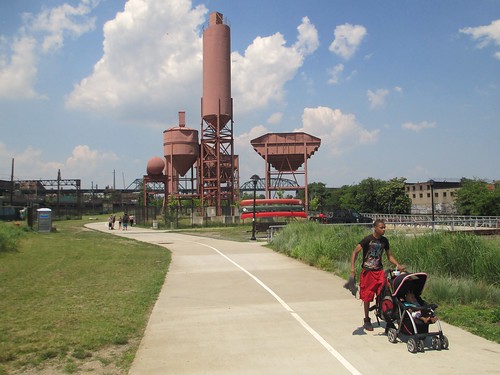
Concrete Plant Park: a park that used to be a concrete plant -
with older gentlemen speaking in Spanish

Having wished him a good day in return, I pushed my bike towards a bench, rummaged in my pannier bags and got out my lunchtime sandwiches. I ate my lunch contemplating the scenery – if that’s not too strong a word - of the Bronx River. The older man continued an animated discussion with a friend in Spanish.

The interchange in Concrete Plant Park was one of many joys of my bike ride this past Saturday almost all the way across New York, from my home in Brooklyn, to City Island, in The Bronx. I enjoyed stunning views, weather a little less stifling than the city summer norm and arrived at a charming New England fishing village strangely marooned in the city.
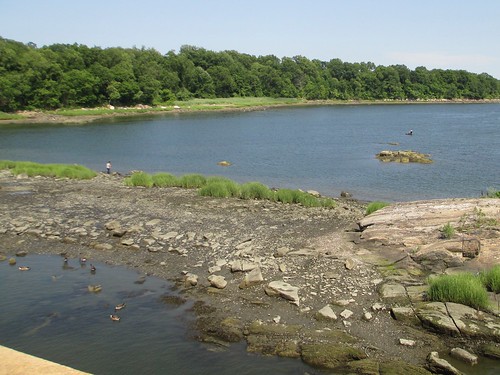
The Hutchison River: not most people's idea of
what The Bronx looks like

However, the aspects of the trip that stood out weren’t those I’d been anticipating. I’d expected to explore New York’s relationship with the inlets of the sea, rivers and islands that define the city’s unusual geography, confining high-rise Manhattan to one small island and allowing other parts of the city to sprawl.

I came back with a still more powerful sense of the city’s remarkable atmosphere – of its people’s readiness to engage, their straightforwardness and their sense of fun. My only regret is that the city still hasn’t properly harnessed its people’s vigour and enthusiasm to a serious effort to make its streets safer. That feeling is all the more intense because I came on my way home on the aftermath of a car crash. While it seemed to have had no serious consequences, it could easily have killed someone.

I headed out partly because I was lonely, after my wife and children went to visit family in the UK, and because I wanted to regain some fitness after being off my bike for two weeks in June with a broken foot.
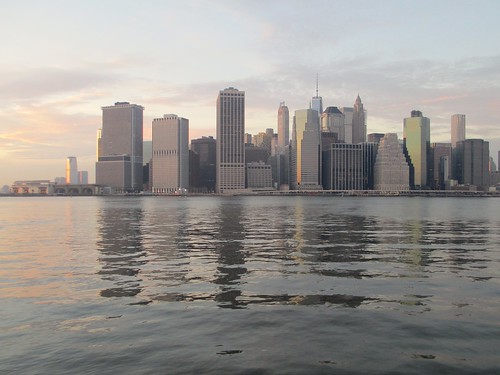
Financial District skyscrapers, reflected in the East River:
giraffes round a watering hole - or something.

I planned my route to take in all the city’s boroughs, except for Staten Island, and a series of different land masses. I would start on Long Island, where I live, cross over onto Manhattan Island, then the twin, linked Randall's and Wards Islands in the East River. Then I’d cross onto the US mainland in The Bronx and finally out onto City Island in Long Island Sound. I was particularly determined to have a positive experience after someone suggested to me I always made New York sound an appalling place when I wrote about cycling here.

I had the idea for the route because I’m struck by how it’s the areas where it’s impossible to build – the East River, the Hudson, New York Harbour – that give the land in the city its sense of place. Some of the city’s densest, highest-rise areas are crowded round the water, as if the buildings were so many giraffes, crowding round a drinking hole. The meandering Thames and the city’s other rivers and canals give parts of London a similar feeling. But there's nothing there quite as spectacular.
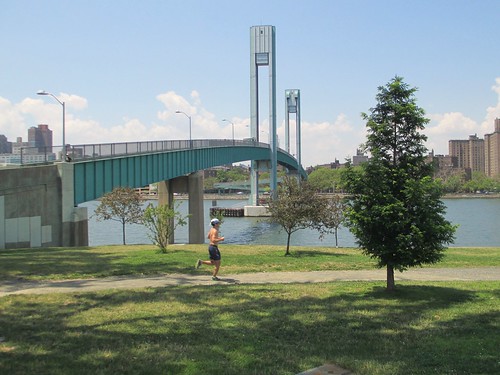
The 103rd St bridge: drama - and a passing New Yorker too

The moments of greatest drama were indeed bridges that swept over key canals and inlets of the sea. The Pulaski Bridge carried me over Newtown Creek from Brooklyn to Queens, with a dramatic view of midtown Manhattan to my left; the Queensboro Bridge soared high above Roosevelt Island in the East River; the graceful 103rd St foot and cycle bridge carried me from Manhattan onto Wards Island, in the centre of Hell Gate at the junction of the East River, Harlem River and Long Island Sound.

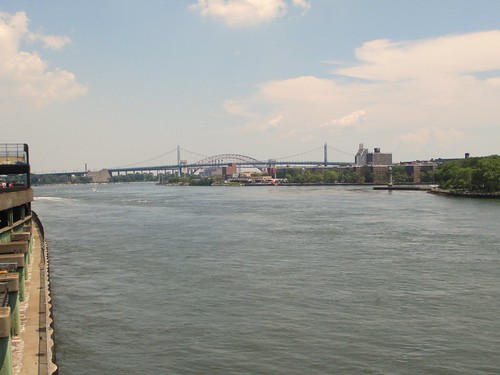
I was struck anew as I rode – but not surprised – by the influence over the city of Robert Moses, the powerful – unelected – official who shaped planning for New York City and state between 1924 and 1968. Moses was a passionate fan of open-water swimming, roads and parks. It was unmistakeable how that trio of interests had led him to make particularly wrenching changes to the bits of the city nearest the water. As I rode up by the East River in Manhattan, I was pedalling at one point on a promenade that Moses built above a section of East River Drive that he designed, looking across towards Randall's and Wards Islands, which he entirely reshaped, and at his Tri-Borough Bridge.
 
East River Drive, Tri-Borough and Wards and Randalls
Islands: Robert Moses' influence on the city, crowded round
the East River
But a different sensation started to creep over me. It began with the driver in Cobble Hill who carefully waited for me to start when some lights changed and I was stuck behind a car. “You goin’?” he asked politely, before letting me move off. It continued with the man in Concrete Plant Park. Then I noticed a man ahead of me as I rode along the Pelham Parkway in The Bronx. He was an almost laughably complete picture of how people would imagine a cyclist from the area that first spawned rap should look. His baseball cap faced backwards and his BMX bike was so tiny he had constantly to stand up. Yet he was looking, like me, to get somewhere particular, as fast as he could.

“Orchard Beach?” he asked me as we waited at a crossing over a road. He was referring to a vast beach that Robert Moses created just north of City Island. “Where dat at?”

I advised him to follow me.
 
The Bronx River, from Concrete Plant Park:
can there be nature that's also grittily urban?
Again and again as I rode, I was aware of how the city’s people were working as hard on this hot, not-too-humid Saturday at enjoying themselves as they would during the week at their jobs. As I returned home through Concrete Plant Park, I stopped to fill my water bottle at a drinking fountain and interrupted a girl – maybe three or four – filling a vast pile of water balloons. Her mother, who was assiduously helping her, told her in Spanish to wait while I filled my bottle. Then the great task – whose ultimate goal was unclear to me – continued.

Other parks were full of the elaborate barbecue parties that will be familiar to anyone who knows New York. Moustachioed fathers were lugging big grills into position while women fussed over coolers full of marinating meat. Sound systems blared Latin music.
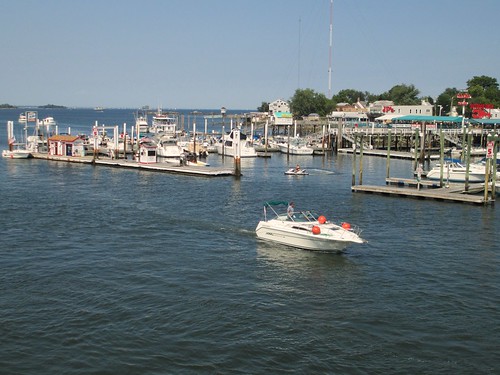
 
City Island: different from most outsiders'
perceptions of The Bronx
It was almost an anti-climax after immersing myself in the vibrant, multi-ethnic atmosphere of The Bronx’s parks to ride over the bridge onto City Island and find a neat suburb of clapboard houses and seafood restaurants. I rode down to the island’s tip, took some pictures of the seagulls flocking round the seafood restaurants, then rode back up the island to the Lickety Spit café. The ice cream felt well-earned.

The impression of New York as a vast, crazy communal effort grew on me still further as I headed home. I puzzled a group of young, African-American men just after I left City Island by asking if they needed any tools for the bike they were trying to fix. It was fine, one of them assured me. He looked up, however, and added: “Thank you, my brother.”
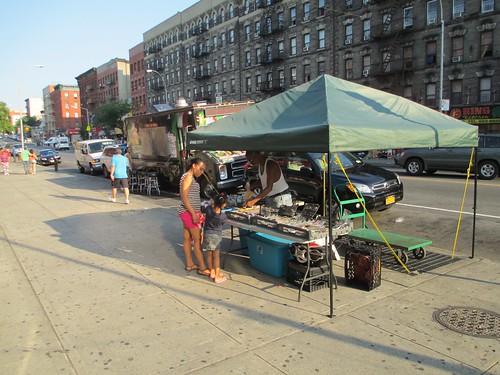
The South Bronx: battered by Robert Moses,
but unbowed
The streets grew more and more crowded as I headed south and the sun sank in the sky. In East Tremont in The Bronx – an area where Robert Moses’ cross-Bronx expressway wreaked particular social devastation – there were little knots of people out on the streets, gathered round attractions whose significance I didn’t understand.

I was feeling, I realised, the flipside of the atmosphere in New York that makes drivers short-tempered and intolerant. Its being a hard and uncompromising place to live, I began to feel, gave many of the city’s people a directness and determination that felt life-enhancing and exciting to be around. New York has a way of pummelling the timidity and shyness out of one.
 
East River Drive: it's possibly to drive too directly and frankly
Yet, perhaps inevitably, I was to come across a reminder that that frankness and directness don’t always mix well with being on the roads. As I rode along the East River shore of northern Manhattan, I noticed an unusual number of emergency vehicles heading south on the adjoining East River drive. Rounding a corner, I found a group of them working to turn back upright an car overturned in the lanes nearest the cycle path. “It just started turning over,” I heard the clearly stunned – but thankfully not badly hurt – driver telling an ambulance crew.

“People think they can drive any speed and nothing will go wrong,” I remarked to another onlooker, trying to put across a road safety message.

He wasn’t ready to hear.

“Yeah,” he replied. “But to walk away from that – impressive!”

It was a response that, under some circumstances, I could have found depressing. It’s dispiriting that so many people focus when thinking about their road behaviour on what they can walk away from, rather than what’s rational for them and those around them. I could also have grown frustrated at how many of the miles of waiting drivers I subsequently passed were leaning on their horns, as if their frustration would make the emergency workers go faster.
 
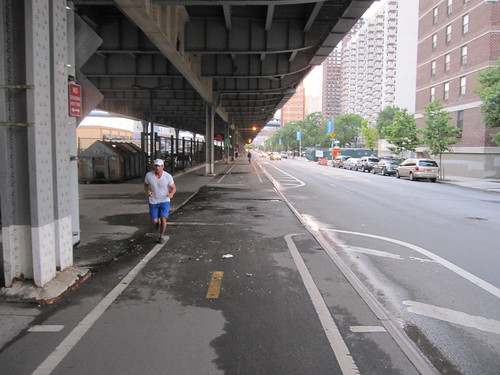
The East River Promenade: nice enough to make one forget
the city's shortcomings.
But, even as I rode past the honking vehicles, I was taking in the different – but still positive – atmosphere of this far more prosperous part of the city. People sat on benches looking over the East River watching the powerful currents that tear through the area around the tip of Roosevelt Island. Residents of the Upper East Side wandered along the esplanade so calmly and contentedly in the setting sun that it felt almost like riding through an idealised architect’s drawing of a perfect urban scene. I noticed as I rode across the Queensboro Bridge how beautifully the bridge was reflecting in neighbouring glass buildings.

It was, in the end, a round-trip of 56 miles on a day when temperatures reached nearly 30C. I arrived home hot, sweaty and feeling a keen need for the Chinese food I’d put aside that morning.

But I’d worked at enjoying myself just as much as the grill-lugging fathers I’d seen in the parks, and I came home feeling more connection with the city’s alternately infuriating and endearing people than I’ve ever felt before.

Perhaps, a voice inside me suggests, I am becoming a New Yorker.

Monday, 13 January 2014

A terrifying avenue, a new mayor - and how leaders should be handling traffic problems

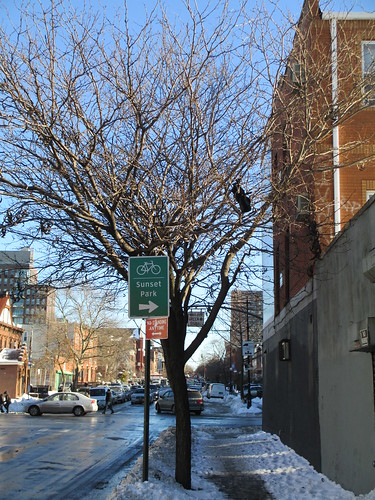
It was one Saturday in November that I happened upon one of South Brooklyn’s most thoroughly dysfunctional streets. Seeking to take the Invisible Visible Boy for a trip to Brooklyn’s shorefront greenway, I naively followed the cycle route signs pointing me down Brooklyn’s 3rd Avenue towards the waterfront bike path. But, after a little while, as I rode southward with the boy behind me on his trailer bike, we found ourselves grappling with high-speed traffic heading onto and coming off the highways around us.
The sign that tricked me into cycling down
3rd Avenue. To be fair, it doesn't read
Sunset Park (via traffic dystopia).

Then, as we rode into Sunset Park – a stretch of Brooklyn along New York’s harbour front, looking across to Staten Island - 3rd avenue plunged into the shadow of the Gowanus Expressway. The din of overhead traffic always in our ears, we found ourselves constantly buzzed by high speed vehicles or cut off by cars turning into or out of auto repair shops. The street seemed like as complete an example as one could imagine of a street designed for motor vehicles with no thought for human beings.

Look at this picture, readers. Then remember, with astonishment,
that the man who forced this road down this route died feeling
New York City was insufficiently grateful to him.
So it was a shock when I discovered that, until 1941, 3rd avenue in Sunset Park was the heart of a thriving community. The street was famous for its restaurants and the food shops that supplied the area’s people – who were mainly immigrants from Norway, Sweden and Finland. According to The Power Broker, Robert Caro’s classic biography of Robert Moses, builder of much of modern New York, it was only in 1941 with the opening of the Gowanus Parkway - since substantially widened and turned into an expressway - that it started the decline into traffic-dominated squalor.

Moses insisted, despite pleas from the residents, on building his parkway above 3rd Avenue when it would have done far less damage above 2nd avenue, nearer the already industrialised waterfront. Moses dismissed the poor but proud community in Sunset Park as a slum and consequently not worth saving.

I’ve been pondering the Moses story particularly intensely recently as I've noticed how often powerful individuals shape places’ urban fabric – and particularly people’s ability to get around those places easily and safely. That’s in part because of the end of the term in power of Michael Bloomberg, mayor of New York for 12 years until December 31, and the start of the term of Bill de Blasio. Bloomberg’s transportation commissioner, Janette Sadik-Khan, pushed strongly for the introduction of new, better bike lanes and pedestrian plazas, chipping away at some of the damage Robert Moses did by making the city so dependent on cars. Bloomberg’s successor has promised to continue making decisive changes on the city’s streets. It was part of his election platform – and critical to winning his endorsement by StreetsPac, the safer streets action group – that he promised to work towards eliminating pedestrian deaths altogether.
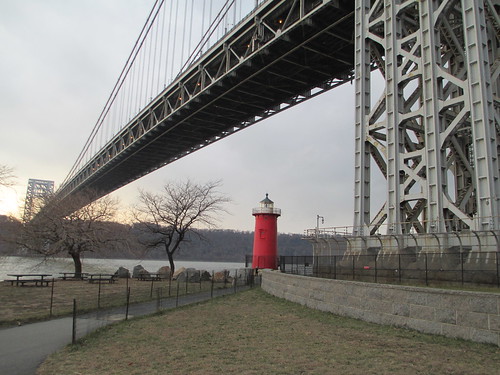
The George Washington Bridge over the Hudson:
the world's biggest political plaything?

In London, it’s becoming steadily clearer that the efforts of the mayor, Boris Johnson, to provide both better cycling and walking conditions and faster journeys for motor vehicles are collapsing under the weight of their internal contradictions. In Toronto, it’s one of the emblems of Toronto’s general civic tragedy that its clownish, crack-smoking mayor has ripped out some important cycle lanes. Over the past week, I’ve been watching how political operatives in New Jersey used traffic congestion to punish the mayor of Fort Lee, a small town by the George Washington Bridge, apparently for supporting the wrong candidate in the state’s gubernatorial election.

Taken together, the various cases illuminate some core principles. It’s important that leaders have a clear vision for how they want their cities’ transport systems to work and that they’re prepared to tackle forthrightly the kind of obstructionism that almost any significant change to the urban fabric creates. But it’s also vital that those plans are based in a real, solid understanding of what’s going on at street level, that they’re flexible when there are serious concerns and that the plans are carried out within the rules of the political game. Leaders need to exercise the self-discipline to put long-term policy goals ahead of the need to have concrete successes to show before the next election.

Traffic stuck bumper-to-bumper on the Gowanus Expressway
on a quiet January Sunday: true testament to the success
of Robert Moses' road-building
Moses – who wielded power over aspects of transport and planning in New York State and City in various forms from 1924 to 1968 – provides the most spectacular examples of what can go wrong. In Sunset Park, he pushed the elevated highway down 3rd avenue because, he claimed, the existence there of structures supporting a recently-demolished elevated rail line would make construction along the avenue cheaper. But that probably wasn’t as decisive as his simple conviction that the people of Sunset Park were dispensable. It’s a principle he followed all over New York City and State when he encountered people or environments for which he didn’t care. The more one knows about Moses, the more one spots around the city problems – whether clogged, disruptive freeways, crumbling subway lines or ugly, unsuitable public housing projects – that could have been avoided if Robert Moses had been made to obey the same rules about planning and due process that others followed.
 
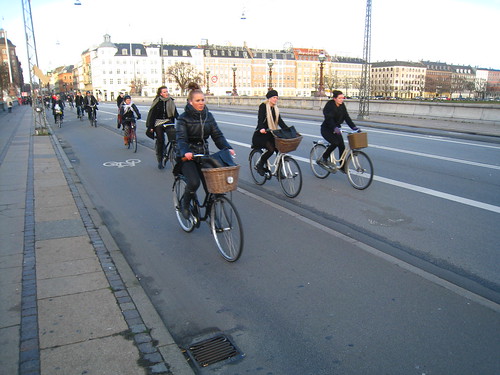
Cyclists pedal on a dedicated lane over Copenhagen's
Dronning Louise Bridge. Key difference between these
lanes and London's Cycle "Superhighways": those in
Copenhagen are good, effective public policy.
On a far smaller scale, Boris Johnson’s initiative in London to build “Cycle Superhighways” along main roads exhibits a Moses-like deafness to criticism. No cyclist shown plans for the “superhighways” – which are mostly simply painted blue strips along frighteningly busy roads – could have avoided concluding that riders using them would be terrifyingly vulnerable to the neighbouring traffic. The desire to have achievements to show in the mayor’s first term and a wish to devise a cycling policy distinctively different from that of Ken Livingstone, Boris Johnson’s predecessor, seem to have trumped any urge for mature reflection, however. Livingstone had developed the London Cycle Network of quiet routes along back streets.

The Cycle Superhighways look embarrassingly inadequate when compared with the bike lane that Janette Sadik-Khan championed around a mile away from the worst of 3rd Avenue, along Prospect Park West in Park Slope. The two-way protected lane illustrates, partly, the value of clear thinking and good planning. The lane wasn’t built by pretending, as Boris Johnson has with the Cycle Superhighways, that bike facilities can be built with no effect on motor cars. It took away a lane of car traffic. Sadik-Khan, who had a strong record of listening to the community boards that provide New York neighbourhoods with a voice on planning issues, defended the decision to build the lane in the face of legal action that has now rumbled on for years but served only to highlight how well worked-out and widely supported the original policy was. Her stance puts Boris Johnson’s insistence on following incompatible goals in his roads policy to shame.
 
The George Washington Bridge's Fort Lee entrance
(albeit the bike, not car lanes). Taken last summer,
before politicians realised the scene's full potential.
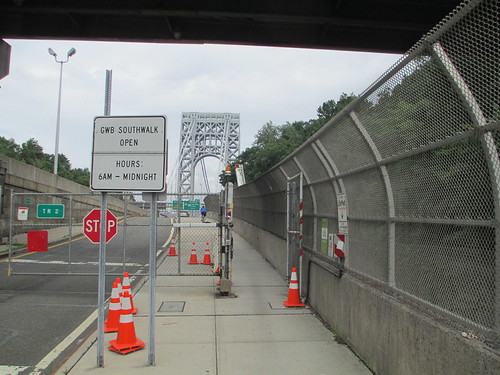
Boris Johnson, however, has at least largely avoided the ultimate transport policy error – of taking steps for purely short-term political reasons. Those seem to have been the motives for the closure for four days starting last September 9 of two of the three access lanes from the town of Fort Lee, New Jersey, onto the busy George Washington Bridge to New York City. An official in the office of Chris Christie, New Jersey’s Republican governor, seems to have ordered the closures to choke Fort Lee with traffic after the town’s Democratic mayor endorsed the Democratic gubernatorial candidate, Barbara Buono. The incident – which held up school buses and emergency vehicles, as well as thousands trying to get to work – was one of the most serious moral failings of transport policy practice I’ve ever come across. New Jersey appointees on the board of the Port Authority of New York and New Jersey, the bridge’s operators, seem entirely to have lost sight of the reason for the bridge’s existence and seen it purely as a political tool.

Bill de Blasio fortunately seems unlikely ever to lapse into such downright political cynicism. It was in a supportive spirit that I and some other people concerned about road safety turned up outside his inauguration ceremony on January 1 to remind him of his commitment to cut road deaths. There’s a clear sense of optimism abroad that Mr de Blasio and Bill Bratton, his new police commissioner, might have the courage to start tackling New York City’s appalling road safety record – at the time of writing, the city has already suffered nine traffic fatalities this year. Polly Trottenberg, Sadik-Khan’s successor, even came out ahead of the inauguration to talk to the Vision Zero activists and to hear the heart-rending stories of some of the bereaved parents who were there.
 
Inwood Hill Park: Robert Moses couldn't really understand
why anyone would think the road hadn't improved
this last patch of primeval forest in Manhattan
But, however optimistic the mood on January 1, I couldn’t help wishing I’d been able to take Mr de Blasio with me on the trip I’d taken the previous day, for a family trip to the New York Botanic Garden. To get to the garden, more than 20 miles from my Brooklyn home, I rode up by Robert Moses’ Hudson River Parkway, taking in how it had cut nearly all western Manhattan off from the city’s stunningly beautiful Hudson River waterfront.

I rode under the George Washington Bridge, glancing up to take in the traffic conditions. Then, towards Manhattan’s northernmost 
Two of the three cars that crashed in northern Manhattan
on Mike Bloomberg's last day as mayor: just another
part of the legacy handed Mayor de Blasio
tip, I encountered one of Moses’ most infamous pieces of civic vandalism – Inwood Hill Park, a stretch of primeval forest that he wrecked by needlessly driving a road right through its middle.

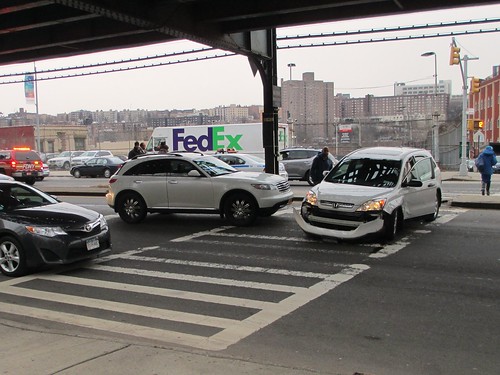
A scene we would have encountered on the way back would have been just as instructive. On Broadway, by the bridge leading from the Bronx – which Moses’ road was meant to free from traffic – I found a long traffic jam. At its head were three cars, crashed into each other.

This, I might have told the soon-to-be-mayor, is the legacy you’ve been handed. It’s a city still reeling from a mad effort to make it almost entirely dependent on the private car - and plagued by regular, serious car crashes as a result.

“Please remember the lessons of all the bad and weak leaders who made it like this,” I’d have begged him. “Please try to make it at least a little better.”

Saturday, 23 November 2013

A futurist, an urban bike ride - and why we're slaves to yesterday's vision of tomorrow

I’ve long enjoyed pondering how living today measures up to yesterday’s vision of tomorrow – and how it falls short. I can now receive wirelessly once-unimaginable volumes of information – but poor software makes the device responsible crash. I can find out almost whatever I want at the press of a button – and I get it surrounded by links to stories about how celebrities look without makeup. I can theoretically work as easily in a 150mph train as in my office – but humans overload every system they build, so I can’t. It was always smoother and cleaner in science fiction.

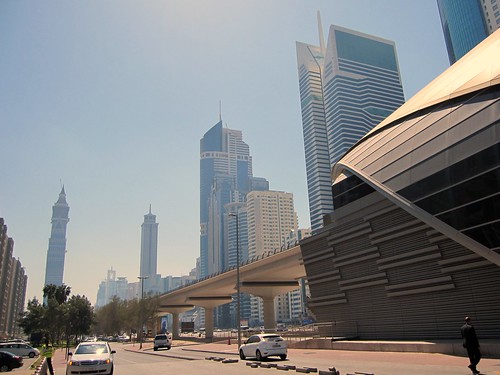
Sheikh Zayed Road: Bel Geddes' vision realised
in a dusty desert dystopia
Yet, even as a connoisseur of the former future’s shortcomings, I was taken aback when I visited an exhibition on the work of Norman Bel Geddes, an early to mid-20th century futurist. I went to the exhibition – at the fabulous Museum of the City of New York – largely to let the six-year-old Invisible Visible Boy gawp at Bel Geddes’ plans for streamlined bubble cars, vast flying boats carrying 500 passengers and a plan for a floating air terminal off the tip of southern Manhattan. But suddenly, as I looked at one of Bel Geddes’ plans for a future city, I saw a plan eerily similar to a place I know – Dubai’s Sheikh Zayed Road – staring back at me. The more I looked, the more I noticed how Bel Geddes’ strange, extreme visions for the future had shaped not only relatively exotic places like Dubai but the environment I could see outside the museum’s Upper East Side windows and that I’d known in other parts of the world.

The exhibition brought home to me a new version of a famous quote from John Maynard Keynes. Practical men who believed themselves to be quite exempt from any intellectual influence were “usually the slaves of some defunct economist,” Keynes said. Town planners, it occurred to me, were normally grappling similarly with some dead thinker’s vision of the future. The continuing legacy of people like Bel Geddes – and people he influenced, like Robert Moses, builder of much of contemporary New York and influencer of planners worldwide – explains why roads in so many cities cater so poorly to the full spectrum of users. I left struck with the obligation for the present to bequeath the future something better.
 
Central Park, near where I rode: cycling here didn't fit
with Norman Bel Geddes' vision
My revenge on Bel Geddes had started even before I got to the museum, though. Bel Geddes’ vision of the US in 1960 – unveiled at the 1939 World’s Fair in Queens and sponsored, tellingly, by General Motors – envisaged a country criss-crossed by highways with pretty much all transport provided by some form of motor vehicle. Bel Geddes specifically called for creation of urban motorways. “There should be no more reason for a motorist who is passing through a city to slow down than there is for an airplane which is passing over it,” Bel Geddes wrote. I scoffed at his ideas by enjoying a 12-mile cycle ride to the museum - over the Brooklyn Bridge, up the Hudson River Greenway and through Central Park.

But it was also clear once I’d visited the exhibition that I’d ridden through some concrete-and-steel expressions of Bel Geddes’ ideas. As I headed north of 59th street, my cycle route ran under the Henry Hudson Parkway, one of many freeways that Robert Moses designed to realise a vision similar to Bel Geddes’ to cater to motor cars. When I lived in London, I would sometimes cycle under the Westway, another urban motorway intended to speed motorists through an urban landscape as if it wasn’t there. Glasgow, where I grew up, has built so many urban motorways it sometimes feels as if there’s little city left.

Robert Moses' Verrazano Narrows Bridge across
the entrance to New York Harbour: typically bold and
audacious - and, equally typically, part of making Staten
Island New York's most car-dependent borough
All of those roads started out offering glamorous promises for a better, freer tomorrow and are now clogged up by congestion. When everyone tries to drive a car into a city, it turns out, they often end up slowing each other down.

Those visions of future utopias had become dystopias, it occurred to me as I rode home, because of shortcomings that become obvious on closer examination. In such visions of a smoothly-running automotive future, cars are only ever shown moving, not parked. That’s not an omission that seems credible to anyone who’s ever cycled around Brooklyn on a street-cleaning day. Street after street clogs up as drivers double-park their vehicles on the other side of the street to let the cleaning machine past.
 
The cycle and walkway by Robert Moses' Shore Parkway:
People squeezed into a space full of cars
The cars also run an orderly distance from each other in past visions of the future. At the World’s Fair, Bel Geddes made it clear that he thought radio control by 1960 would be preventing cars from crashing into each other. Pedestrians seem to have been out of the equation because Bel Geddes thought they would all be on elevated walkways. Although pedestrians are segregated on walkways in some places – like Hong Kong – his vision is laughably at odds with the honking, disorderly reality of contemporary urban roads.

However, the biggest failing of the former futurists’ vision is that they fail to recognise how the future has to fit into past visions of the present. It’s seldom possible to build a city from scratch with no regard to the existing buildings and streets – although, of course, many of the attempts to realise the futurists’ visions were made in cities razed by second world war bombing. Only Robert Moses’ remarkable political power allowed him to demolish so many New York neighbourhoods to accommodate his grand road schemes.


Varick Street, lower Manhattan:
Robert Moses would have liked to clear
these pesky pedestrians away.
It was the clash between the past and the future that finally put a stop to Moses’ drive in New York. A film at the Museum of New York describes how his attempt to build an expressway across lower Manhattan foundered on the unlikely rock of Jane Jacobs, a writer and theorist who organised opposition and had the scheme stopped. Jacobs loved the architecture and streets of Greenwich Village, where she lived, and thought the area’s townhouses and tenements worth preserving. There would be similar battles fought - some won, like the battle to stop Edinburgh's Old Town from being demolished for a motorway, and some lost - right across the developed world in the decades to come.

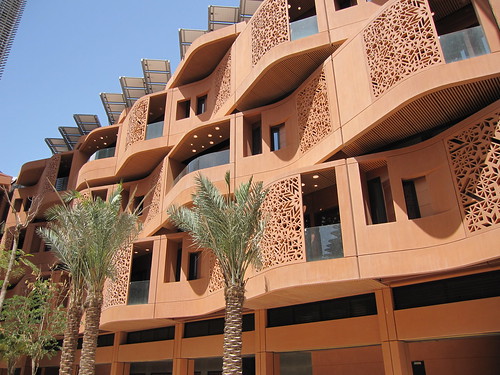
Even the United Arab Emirates has started to realise that car-dominated cities pose severe problems. There’s now a metro line along Sheikh Zayed Road, running above the cars. Last time I visited the UAE, I was also able to visit a more Jane Jacobs-ish model of a Gulf city in Masdar, outside Abu Dhabi. While it features a rather Bel Geddes-ish underground electric car system, Masdar is designed to replicate the traditional urban patterns of middle eastern cities, with fountains, high stone walls and structures designed to produce natural breezes. Cars are banned from the heart of the town and the planners intend that cycling will be one of the ways inhabitants get about.

Masdar: a Gulf vision Bel Geddes didn't inspire
Few places, however, have the luxury of starting from scratch as the Masdar planners have done. New York and other big cities consequently live with some of the kind of old infrastructure that Jane Jacobs fought to preserve and some of the futurist infrastructure that Robert Moses promoted. The challenge is to work out how best to adapt both to fit the future.
 
The Williamsburg Bridge's bike and pedestrian lanes:
proof the future contains more bikes, but looks less neat,
than Norman Bel Geddes envisioned
The tension has struck me powerfully this week. There is some excellent, new provision for me and my bike in contemporary New York, built by city authorities who think the city in the future will need more people to get about roughly the way I do. I’ve also, however, attended this week a protest calling on the police to stop speeding drivers after the death on October 26 of Lucian Merryweather, hit by a speeding driver on a Fort Greene sidewalk. I’ve also a couple of times had to cycle down part of 2nd Avenue in Manhattan and then onto the East River bike path.

The cars on 2nd avenue, when not caught in a traffic jam, would buzz me at intimidating speeds. Then, as I sought to get onto the East River bike path, I had to cross an off-ramp from FDR Drive, the kind of urban expressway I’d seen staring back at me from Bel Geddes’ pictures.

The cars came roaring off the expressway into the city streets, most still running at a good 60mph. As I watched them, wondering when I would safely be able to cross, I thought of Norman Bel Geddes. Some of his vision now looks strange and much of it looks downright dangerous. But there remain many drivers who see no reason why a car should have to slow down just because it’s in a city.

Tuesday, 9 July 2013

The Gorbals, Robert Moses and the hometown blues

For years when I returned to Glasgow, the city where I lived on and off from the ages of four to 24, relatives and acquaintances would suck their teeth as I mentioned how I cycled in Edinburgh, London or Budapest, the cities where I’ve lived in the two intervening decades. Cycling would never take off in Glasgow, they explained, because of the weather. The persistent, year-round rain would make it impossible.
 
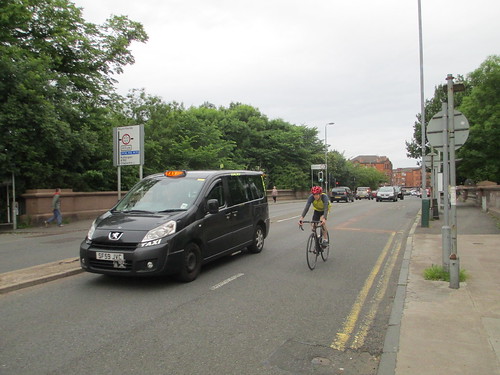
A cyclist in Glasgow: doing his best to follow my lead
from 20 years ago
It was consequently a pleasant surprise when I enjoyed a few days’ brief return home last week to discover that I’d been only 20 years or so ahead of the times when I cycled regularly in Glasgow. I saw none of the large packs of commuting cyclists that are becoming features of the London and even sometimes the New York streetscape. But there were undoubtedly far more noticeable numbers of cyclists about on the streets, competing with double-deck buses, trucks and cars for space on the roads.

Yet cyclists’ growing visibility is by no means the most important recent transport change in the city. Across the Gorbals, a notoriously rough area where I used to cycle between my parents’ home and my postgraduate journalism course, there now strides a vast motorway viaduct, opened two years ago in the name of relieving congestion on older, 1970s and 1980s motorways. The new road – an extension of the M74 motorway leading to England – was built against planners’ advice and looks set to keep the Gorbals as depressing as in the 1990s.

My clearest memory of riding in the Gorbals then is of jostling with cars while riding by a vast, wasteland lot. I knew it had, in happier times, housed elegant tenements designed by Alexander “Greek” Thomson, a 19th century architect dedicated to turning everyday Glasgow buildings into visions of classical elegance.

The new road’s presence prompted me to notice quite how much space Glasgow devotes to the private car – and how far the priority cars receive helps to sustain their dominance. I also noticed how much priority the city’s road network gave to saving motorists time – at the expense of pedestrians and cyclists. That in turn put me in mind of how much space and time both New York – to which I’ve returned this week – and London – where I’ve lived 11 of my post-Glasgow years – lavish on users of private cars.

The FDR Drive was one of the few New York highways
not built by Robert Moses. But the neighbourng housing projects
were - and illustrate precisely how much care the
"master builder" took to create warm, vibrant neighbourhoods.
All of those cities have made admirable strides in the last decade towards enticing residents back onto the bicycles that had been abandoned as urban transport tools. But the more I thought about practical conditions for cycling in those places, the more it struck me that cyclists were often working against the grain of the cities’ current structures. Their true inclinations remained shaped by people like Robert Moses, the “master builder” who in the 1950s and 1960s sent road bridges springing across New York City’s waterways, tunnels burrowing under its harbour and expressways marching across many of its urban neighbourhoods.

Not, I should add, that I envy the task of Glasgow’s transport planners. The city, once a thriving centre for shipbuilding, maritime trade and heavy industry, has suffered from nearly every economic dislocation imaginable. Trade’s focus has shifted from Britain’s Atlantic coast towards those near sea lanes to and from Asia. Shipbuilding, undercut by Asia’s low wages and high efficiency, has all but disappeared. Other countries now make the huge freight locomotives my mother recalls seeing heading down her street on their way to haul goods across South Africa or India. The city could hardly have failed to hollow out as tens of thousands of its working class citizens lost their jobs and left homes that had been clustered around their workplaces. New York and London have undergone similar changes following deindustrialisation, but haven’t quite so comprehensively lost their senses of purpose.
 
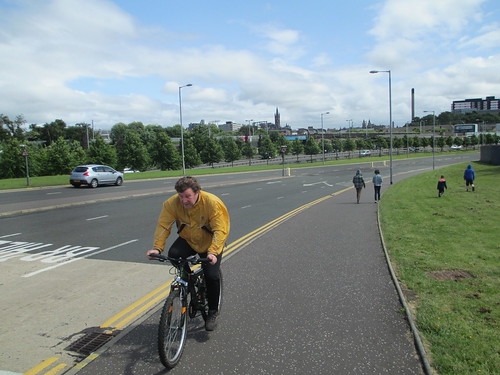
A cyclist labours up the pedestrian/bike path near the
Riverside Museum. You've certainly got to admire
his determination when the city's so obviously telling him
to go about by car
Yet a family visit to the new Riverside Museum – part of an attempt to revive one of the areas worst hit by recent decades’ changes – revealed how far Glasgow goes out of its way to thwart anyone who abandons the car. In a short walk from Partick railway station to the museum, we had to pick our way across first a busy, two-lane road, then take a bridge across a four-lane expressway, before immediately crossing a second, five-lane road. The traffic lights’ pedestrian (and cyclist) phase took so long to come around it seemed like a calculated insult.

The area is not the only one so thoroughly given over to roads. Four thick, grey ribbons of tarmac – two carriageways of a trunk road and two motorway carriageways – wind their way across one stretch of the city’s south side that might, without them, stand some chance of revival as hip, inner-city neighbourhoods. North American readers unfamiliar with the city should picture the way Detroit’s urban freeways slice through its neighbourhoods to understand the effect.
 
A Glasgow-built Cunarder tram in the Riverside Museum:
the acme of British tram design, from a city about to take
a wholly different path
The irony is that, on reaching the museum, visitors discover how well Glasgow once provided far more human-scale types of mobility. The Riverside Museum is full of tramcars (trolleys, American readers) dating back to the days when the city’s public transport system was noted for its modernity and comfort. Exhibits are devoted to the city’s subway, opened in 1896, only the third urban underground anywhere in the world, to which my late father devoted the prime of his life. That public transport allowed the city to support large numbers of people in neighbourhoods densely-packed enough to support large numbers of shops, cinemas and other amenities. The tram tracks were ripped out and the urban motorways built in the same wave of modernisation during which Moses slashed Red Hook from Carroll Gardens with the Brooklyn Queens Expressway, severed Manhattan from its waterfront with the Henry Hudson Parkway and made suburban Long Island entirely car-dependent by building only expressways to serve new housing. There was certainly a need for some modernisation. In both Glasgow and New York, the post-war period saw the elimination of many notorious, dangerous, insanitary slums. It's simply hard looking at the end results to believe there wasn't a better way to achieve the goal.

I was particularly alive to the nature of Glasgow’s failure because during the trip I was reading 722 miles, Clifton Hood’s fine history of the building of New York’s subways. In it, he laments how after the first world war, John Hylan, the then-mayor, sponsored subway construction within then-built-up parts of the city but failed to keep extending the subways out to new, undeveloped areas. The result was that areas like Staten Island developed entirely differently from other bits of the city. As I can testify from personal experience, they remain dominated by wide roads full of fast-moving cars. It wasn’t hard to spot a similar process at work in Glasgow. Roads blight swathes of places like Partick, Kinning Park and other areas of the city that once held far higher numbers of people. The populations of those areas are now further away from the city centre in areas so thinly-spread it’s far easier for people to get about by car than by public transport or bicycle.

It occurred to me this evening as I cycled home from work that parts of New York remain as blighted by roads as parts of Glasgow. The thought came into my head as I pedalled frantically across the West Side highway – four carriageways of dense, fast-moving traffic – to reach the Hudson River Greenway before the massed ranks of cars started roaring towards me. Yet New York enjoys the enormous benefit that no politician – even the most anti-cyclist, pro-motorist – would seriously suggest building, say, a new arm of the Brooklyn Queens Expressway devastating a new bit of booming Williamsburg. No-one would suggest devastating Hoxton in London with a new motorway.
 
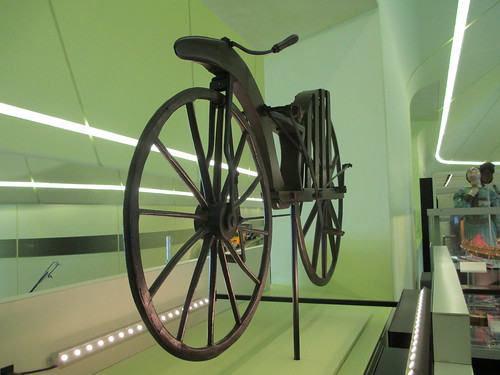
Gavin Dalzell rode this, the world's oldest surviving pedal
bicycle, now preserved in the Riverside Museum, in Glasgow.
With admirable consistency, the city gave him a hard time for doing so.
Glasgow, however, has more in common with struggling cities across the North of England and the US’s mid-west. There’s a desperate edge to some of the transport policy decisions, a feeling that the next city over might prove more car-friendly and attract a vital few investors that could make all the difference. The cities consequently try a bit of everything – some bike routes, some new rail lines, a hulking new urban motorway slicing five miles through a reviving urban neighbourhood. I feel enough affection for Glasgow to hope that the strategy works better than I fear. The city’s continued hollowing-out to facilitate car travel certainly isn’t preventing a revival in vibrant areas such as Hillhead.

But I’d feel far more optimistic if I could picture myself cycling from Glasgow’s south side to its city centre through the kind of bustling city streets where I’ll ride tomorrow morning than under the looming viaduct that now bisects the Gorbals.