Monday, 7 November 2016

A rainy weather puncture, a wave of negativity - and how the haters aren't sweating cycling's details

As conditions for a cycle commute go, the steady rain this past Friday - which supplanted the recent foggy weather - was unattractive even before I started hearing a strange clicking sound from my bike’s front wheel. An inspection revealed the sound was coming from a drawing pin - or tack - stuck in the tyre. I was, briefly, hopeful that the robust puncture proofing of my Schwalbe Marathon Plus tyres might have protected my inner tube. When I pulled the tack free, however, I heard a steady hissing that told me I was going to be undertaking a roadside repair.
A chance tack in a cycle lane or a symbol
of the anti-cycling backlash? The mystery
remains unsolved

Then, after I’d discarded the tack, I started to ponder the antipathy towards cycling and cyclists that I’ve spent considerable time recently discussing in person and via social media. The UK is in the midst of one of its periodic anti-cycling backlashes and I suddenly wondered if the tack had ended up in the new cycle path by Kennington Park by happenstance or malice. I scoured the wet pavement for the tack, photographed it then posted a query on twitter to ask if anyone else had suffered similar problems in the same area.

The act of posting the picture turned my mind back to thoughts about the roots of the recent rage in some newspapers and by some politicians against the growth of cycling. After I recently wrote about the gulf in understanding between cyclists and cycling sceptics, I was bombarded with complaints that I was ignoring some vast conspiracy by the media and politicians to do down cycling. Commenters accused me of varying levels of complacency or complicity in this plot.

I've been assured that I was naive to believe there was no generalised campaign against cycling because it was naive to think automakers had changed tack since their 1920s campaign in the US to have jaywalking outlawed. I've been told that Volvo engineers' designing of a cycle helmet shows there's a plot - use of cycling helmets, after all, correlates with lower cycling levels. I have been repeatedly told that the recent spate of newspaper anti-cycling stories can't be coincidence and even seen it posited that a particular national newspaper reporter "must be in somebody's pay".

The truth is less exciting but no less worrying, I’m convinced. Having spent most of the last 13 years writing at least partly about transport, I simply don’t think most opponents of cycling - either in the UK or the US, where I lived for four years - care enough about the mode to mount such a conspiracy. It seems to me that, instead, many of the media attacks draw on unspoken paradigms about the nature of government. The sprouting of cycle lanes is taken to be an example of the work of politically correct (or possibly “bungling”) bureaucrats, who wrongly think they know better than the average, car-driving newspaper reader what the transport system needs. Cyclists are regarded as some sort of strange out-group like vegans or hardline environmentalists seeking to destroy the lifestyles that ordinary, common-sense people regard as entirely unproblematic.

The best way to combat this narrative, it seems to me, is to seek to change the terms of the debate. I believe there’s a sound, common-sense case for promoting cycling that, in the UK at least, is getting drowned out by complaints about the alleged anti-cycling conspiracy and bitter rows on twitter. It’s all the more urgent to get progress re-started because present conditions continue to prove deadly. Lucia Ciccioli, a 32-year-old Italian woman, was killed on October 24 cycling to work in Lavender Hill, not far from my house in Brixton. A week later, another Italian, Filippo Corsini, 21, was crushed by a lorry in Knightsbridge. I hope that a new venture, Humanstreets, modelled on the admirable, New York-based Streetsblog, will play an important role in making that case.
London's North-South Cycle Superhighway,
at Southwark St: yes, the Daily Mail's
written angry stories about this facility's
existence; no, I don't think they're angry
for the reasons many others suppose

But, as I stood by the side of Kennington Park Road wrestling with my hard-to-remove tyres, I wasn’t feeling optimistic.

I started to think about the nature of anti-cycling anger after seeing a post on Twitter querying why the Daily Mail - which recently ran several pieces claiming that new cycling lanes were “paralysing Britain” - had run a piece touting cycling’s health benefits. The tweet’s tone was to query the Mail’s consistency. But, to anyone who’s worked in a newspaper, the idea that different sections of a paper would need to agree on such a matter is, frankly, ludicrous. British newspaper reporters are, in my experience, mostly uninterested in the content of the policy issues that they cover and far more interested in framing it into what they regard as a compelling narrative. The Daily Mail has a powerful bias in favour of thinking civil servants and council officials are engaged in some plot to impose bad ideas on ordinary Britons. The recent attacks follow that narrative, it seems to me, rather than being based on any strong idea about cycling.

The Daily Mail’s sinister genius is its ability to seize on almost any policy development as evidence that the world does indeed work the odd way its news editors believe it does. Like many people with an interest in road safety, I’m sure, I felt my heart lift this week when I saw that the Mail had run a front page story on distracted driving - only to feel it sink again when I saw that it was defining the problem as being one of foreign drivers. The story was a reminder of how different worldviews compete within many media organisations to shape how issues are reported. The story about cycling’s health benefits reflected the paper’s conviction that its readers want to find out ways to better their health. For that section, that narrative trumped the notion that cycling promotion was the work of nanny-ish bureaucrats.

The Mail’s tendency to report the world according to a set of preconceived notions is unusually pronounced but it has its less sinister counterparts in other places. The Guardian, for example, tends to report public-sector activity favourably and to report on business’ behaviour unfavourably. Some financially-orientated publications are apt to identify strongly with private businesses’ perceived interests. Most politicians I’ve met have a similar tendency to believe in a few core principles and then, in George Orwell’s telling phrase, to buy the rest of their opinions in “matching pairs”.
The East-West Cycle Superhighway by
the Palace of Westminster: inhabited by
owners of opinions bought in matching pairs

Some of the reporting, meanwhile, reflects the one circumstance when cycling policy does get people's attention - when it threatensomething important to them, such as the free parking space they regard as a right. This explains, for example, the regular rows in New York when the Citibike bike-share scheme arrives in a new neighbourhood. People have seen that Citibike is coming but take little interest until suddenly a parking space disappears. The same phenomenon explains the perennial popularity of bad and dangerous on-road cycling facilities. Many politicians are eager to enjoy the chic, green-tinged halo of introducing a bike-share scheme or theoretically encouraging cycling. Yet few are prepared to weather the political storm of introducing facilities, like London’s new segregated cycle superhighways, that truly reallocate space away from motor vehicles and give it to cyclists. Unsatisfactory compromises - bike routes down hard-to-access old railway lines, for example - proliferate.

During my 25 years in the newspaper industry, I have been far more dismayed by other reporters’ cynicism, willingness to go along with news editors’ ill-informed instincts and incuriosity about policy detail than I have by any willingness to cave to outside lobbying. Much the same goes for politicians. When he first became mayor, for example, Boris Johnson - now practically sainted among active travel lobbyists as father of the segregated superhighways - took a series of harmful steps to further what he saw as a pro-business, anti-bureaucrat agenda. He removed space-efficient articulated buses, replacing them with a far worse alternative, scrapped the successful western extension of the congestion charging zone and undertook other measures aimed at “smoothing traffic flow”. Among the traffic-smoothing measures were the admission of motorbikes to bus lanes and a tinkering with traffic-light timing that reduced the time for pedestrians to cross at many busy junctions. All of these measures have contributed to London’s continuing problem with congested, unsafe roads.
The new bus for London: one of Boris
Johnson's early contributions to making
London's roads less efficient

I see this intellectual laziness and policy cowardice as far bigger barriers to the advance of cycling than alleged campaigns - always described as “well-funded” - by sceptical cycling opponents. I recognise that the main incident that fuelled these fears - the circulation by Canary Wharf Group of a screed complaining about plans for cycle superhighways - occurred while I was in New York and away from London policy issues. I also know that London business lobby groups continue to agitate about congestion in London and to blame it disproportionately on the cycle superhighways, which are only one of a series of factors contributing to the current worsening of motor vehicle congestion in central London despite falls in traffic levels. The London Taxi Drivers’ Association continues to fight sensible cycling schemes such as the Tavistock Place cycle tracks in Bloomsbury.

Yet it seems clear to me that the basic instincts of the media organisations concerned and reporters’ tendency to copy stories that they feel have touched a nerve with readers are more than sufficient to explain the current rash of stories. The cowardice of the worst kind of local politician in the face of what he or she perceives to be the public mood is more than adequate to explain the backtracking in many parts of the UK on cycling plans and the actual ripping out of an already-built facility in the Scottish town of Ayr.

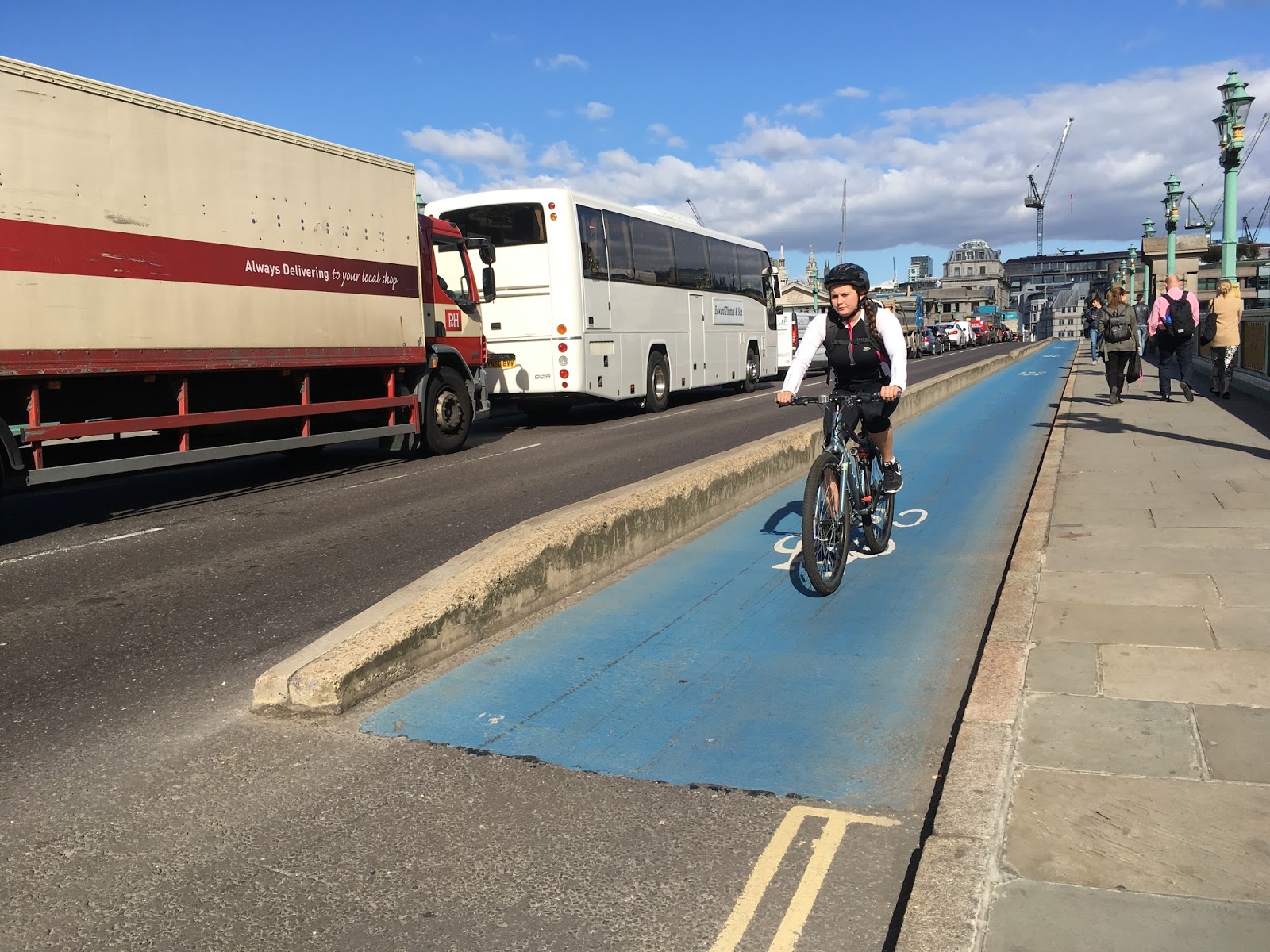
Congestion on Southwark Bridge: campaigners need to
get better at combatting fears about such conditions
if progress is to resume
The good news is that fights against prejudice and cowardice are winnable. It was once held as axiomatic on both sides of the Atlantic, for example, that the struggle against drink-driving was driven by politically-correct nannyism. The practice’s dangers are now universally accepted. There was shock last week when part of the Daily Mail’s criticism of a judge involved in the Article 50 Brexit case was that he was “openly gay”. Until the 1990s, it might have been regarded as a legitimate scoop to expose his sexual orientation.

The bad news is that such battles tend to be protracted, painful and to require considerable guile. Cycling advocates need, it seems to me, to do a far better job of addressing people’s fears about what allocation of space - and time at traffic signals - to cycling means. Will it hold up bus passengers? Can a lower-capacity road really handle all the deliveries businesses along the route expect? I’ve said before that campaigners’ arguments should be far less nit-picking and far more addressed towards a mainstream audience.
After the repair: my bike as I prepared to ride off, feeling
down at heart

It’s not only because of Friday’s experience that I feel pessimistic about prospects, however. Battle lines on both the pro and anti-cycling side seem very clearly drawn. Few people are airing novel arguments.

The worst and most bitter people, meanwhile, are resorting to more direct measures. While I don’t know how the tack I picked up came to be on the cycle path, another twitter user told me he recalled hearing of a tack’s being left around the same place recently. Multiple cyclists riding on the Bearsway cycle path north of Glasgow on Sunday picked up tacks, suggesting a co-ordinated effort at sabotage. That follows a recent, similar incident in Regent’s Park, in London.

Whether my incident was part of that pattern or not, I rode off after 20 minutes’ repair work damp and cold, with skinned knuckles, feeling decidedly downbeat. I will feel more optimistic only when the UK's debate about cycling policy breaks free of its current, unproductive impasse.

Sunday, 30 October 2016

A clichéd advert, cycling in the mist - and what a foggy London reveals about the city's identity

When La Défense, Paris’ equivalent of London’s Canary Wharf, launched a campaign to woo financial services firms from London earlier this month, they used a slogan to make long-term London residents sigh. “Tired of the fog?” it asked. “Try the frogs!” It was an irritating illustration of how comprehensively people’s ideas of London continue to be shaped by Charles Dickens and Arthur Conan Doyle. Especially since the advent of clean air legislation, it’s really not a typical London experience to find a man in a deerstalker emerge into view from only a few feet away, by the light of a conveniently-placed gaslamp.

Foggy London might be as much of a cliché as 
parliament's clock tower. But, as this picture
taken in this week's misty weather shows,
both still exist. 
Yet clichés survive when there’s a little bit of truth in them. The last few days in London have been a powerful reminder for me, after four years in New York’s very different climate, about the distinctiveness of London’s weather. Day after day has dawned with anything ranging from a slight mist to a definite fog. As I’ve cycled to work or to meetings, the air’s felt an odd mixture of warm from the enveloping blanket of mist and cold from the pervasive dampness. Each day has felt slightly different, in a way that’s obvious only to someone travelling about by bike. The experience has stood in sharp contrast to the switchback ride between hot high summer and chilly late fall that my friends still in New York seem to have been experiencing.

The relative mildness of London’s climate fits with a general atmosphere that’s more subdued than in some other metropolises. More intense, denser, in-your-face New York bakes its residents - and especially cyclists - in summer, only to freeze them in winter. Even its fog is more intense. While the city’s less prone to the generalised, damp mist that’s settled over London the last few days, such dense, impenetrable fog sometimes settles over the East River that I sometimes rode to work over the Manhattan Bridge unable to see the water below.

Even its fog is more intense: cyclists head into dense,
East River fog on the Manhattan Bridge bike lane.

My feelings about the weather have made me realise how puzzlingly rural much of London continues to feel. Generation after generation has sought to erect a very English calm facade for a metropolis of nearly 9m people. I’m always a little surprised here when I encounter the same dense crowds of people I’d expect to see at every corner in Manhattan. In Manhattan, by contrast, if workmen were digging a hole and I saw soil underneath, I always felt a little incredulous. The city felt like a mass made solely of concrete and steel that should properly be bolted straight into the bedrock.

The issue has serious implications. In dense New York, far more people live within what should, theoretically, be easy cycling distance of their places of work and education. London’s lower density makes many trips longer and the rationale for getting about by motor vehicle stronger.
The Wimbledon Common windmill: a bucolic scene
a short bike ride from a town centre wrecked by excess traffic

But it’s also striking how London’s current dependence on cars is strangling much of what’s worth preserving. London is formed of a collection of villages that happened to be swallowed by a city. Yet town centres, such as Wimbledon’s, that could be the hearts of communities are instead noisy, polluted and divided rather than held together by roads that should be their main public spaces.

My main insight from the last few days, nevertheless, is simply that fog simply sits well on London, like a comfortable sweater on a middle-aged man. It is almost by definition a form of mild, still, temperate weather. In the streets around where I live in genteel Brixton Hill, that’s of a piece with the rows upon rows of Victorian houses. Instead of being built to impress with their opulence, these represent an ideal of restraint, moderation and good taste. The fog heightens that sense still further because it obscures a skyline cluttered with the towers that are increasingly making the City and the banks of the Thames resemble Dubai.
A City of London back alley in last week's mist:
an oasis thanks to two millennia of haphazard
development.

The effect is thanks partly to fog’s muting effect on the city’s sounds. It may be partly because it so disrupts flights into Heathrow Airport but there has been an eerie calm around my area today thanks to the fog. It’s a very different feeling from our Brooklyn apartment, where we were treated nearly 24 hours a day to a cacophony of emergency vehicles, squealing subway trains and building work. The effect has been all the more striking because I can, if I want, ride down urban streets that feel, in the fog’s limited visibility, as deserted as a country lane. London’s haphazard growth has left it with a wealth of such meandering back streets. The metronomic grid of a more planned metropolis tends to distribute cars more evenly.

I find my horizons closing in metaphorically as well as literally. A foggy day prods one to feel one’s way gently to the local shops, rather than to venture farther afield. Where one’s local town centre is feels mostly like a better-defined question in London than in many other cities. When an improvised bomb exploded at W23rd Street & 6th Avenue in Manhattan in September, for example, there was considerable confusion about how to describe the area (Chelsea? Flatiron?). In London, where some streets were laid out as long ago as the Roman occupation, the delineations mostly seem clearer.

Fog-induced myopia could on such a day trick one into sentimentality about London’s clear, organic links with its past. As I rode my bike back from church in this morning’s fog, I even passed an older spinster lady I know heading by bike towards a later service. She was a living embodiment of one of George Orwell’s archetypal pictures of England - “old maids biking to Holy Communion through the mists of the autumn morning”.

An unfinished part of the east-west cycle superhighway
in Hyde Park: vested interest at work
Yet one of the most striking factors behind the city’s current atmosphere is the prevalence of vested interests among those who control its territory. I was able to cycle across Clapham Common, for example, because the ancient right of Clapham’s people to graze their livestock on a patch of land by the village. Such commons are dotted all across London, often taking up several square miles of empty space. The influence of royalty is still more pervasive. St James’ Park, Hyde Park, Regent’s Park and others occupy vast swathes of Central London thanks to their ownership by the crown. The City of London Corporation, the unelected government of the square mile where the financial industry is concentrated, also owns some big tracts of land, including Hampstead Heath.

These big, conservative landowners are often fixated on their narrow ideas of how their open spaces should be used and hard to pressure to change. Foot-dragging by Royal Parks currently appears to be holding up further development at the west end of London’s east-west cycle superhighway, yet the body’s very unaccountability makes it impossible to force it to obey the will of the people who ultimately fund it.
London's new towers might be as unloveable as Dubai's,
but a denser, more urban London is probably necessary.

The generally suburban feeling in even large parts of Central London, meanwhile, represents a tendency that’s no less insidious. The UK has for centuries nurtured a cultural bias towards the idea that the countryside is more wholesome and honest than the city. Much of London was built with houses surrounded by gardens big enough to persuade their inhabitants that they were not really in an urban setting. Its housing shortages, congestion and car dependency could all be more easily resolved if the city had embraced the need for density far earlier, as constrained New York has all along been forced to do. While London’s distinctive atmosphere will suffer if more high-rise housing is built, the underground, surface trains, buses and cycling will all gain.

Yet it’s easy on a foggy morning to let those big worries go, at least for a while. Instead, this morning I slipped out of the house with my son and headed off along the deserted, early morning streets towards church. The dampness in the air hung so heavy that we felt big droplets kissing our cheeks as our breath filled the air in front of us. Only the leaves stood out, as if they’d painted themselves red and gold expressly to stand out against the fuzzy-white background.
Fog on Clapham Common: scene for an Orwellian idyll.

The mystery only increased as we rode out onto the common. Trees looked like grease stains on a bag from a bakery, the mist rolling more densely round the bases of their trunks than round their branches. Other cyclists and runners emerged from the mist then faded back into it.

The most remarkable point, however, was that this scene was unfolding not in some old, idealised landscape painting but a mere five miles from central London. I was, once again, reminded of the remarkable privileges I can enjoy by simply riding a bicycle to get around this big, infuriating but ultimately endlessly beguiling city.

Sunday, 16 October 2016

A British Stand-off, an Unbridged Divide - and Why it's Time for Cycle Campaigners to Change the Conversation

There was something almost endearingly British about the standoff. In a typical autumnal light drizzle last Saturday in Swiss Cottage, North London, a group of other cyclists and I stood listening to speeches in support of the building of Cycle Superhighway 11, a planned segregated bike route from London’s West End, through Regent’s Park and up to the point where we were standing. Then, a demonstration against the plan arrived. Participants in the two demonstrations did some mild chanting at each other. Afterwards, we went our separate ways.
Protesters against CS11 meet its supporters, in Swiss Cottage:
a very British stand-off


But, however mild-mannered the two demonstrations at Swiss Cottage might have been, there has been no disguising in the past weeks that demonstrators like those opposing CS11 are growing increasingly vocal in many parts of the developed world. From Community Board meetings in Brooklyn to the pages of daily newspapers in the UK, there have been noisy complaints that newly-introduced or planned cycling facilities are a tyrannical imposition by unfeeling authorities out of touch with the feelings of ordinary people.

The UK’s Daily Mail two weeks ago produced the most eye-catching manifestation of the phenomenon, devoting a double-page spread to what it called “cycle lane lunacy,” which it said was “paralysing Britain”. However, there have been plenty of other examples. The Community Board that oversees planning issues in Park Slope, Brooklyn, and surrounding areas is preparing for a meeting where some locals are expected to vent their near-apoplexy over the Citibike bikeshare system’s arrival in their neighbourhood. Local councillors in Ayr, in the West of Scotland, have voted, under pressure from drivers, to remove the town’s only significant protected bike lane.
A cyclist and motorists in Regent's Park: a powerful
illustration of the arrangements the anti-CS11 campaigners
are fighting to preserve


Yet the cycling sceptics and supporters seem as incapable of meaningful communication as the two groups shouting at each other last Saturday morning. The motorists’ side complains that bike lanes often look empty. Cyclists argue that just shows cycling’s efficiency. Motorists complain that cyclists don’t pay “road tax,” as they do. Cyclists reply that vehicle excise duty in the UK has not been a hypothecated tax for many decades. Motorists complain that congestion is growing worse. Cyclists retort that the people complaining are themselves the traffic. My mind turned, as I rode home from Swiss Cottage, to whether there is some way to narrow this currently apparently unbridgeable divide.

A couple of incidents have highlighted to me the width of the communication gap. The first was on September 23 when, after I published in my day job a piece about the future of London’s roads, a former colleague wrote to me. He questioned whether it could possibly be true, as I had written in the piece, that some London roads with cycle superhighways were carrying more people per hour in rush hours than they were before the superhighways were put in place. He also asserted that cycling was, in fact, far more dangerous than people admitted and that, anyway, only the young and fit could do it.
Morning rush-hour traffic on the north-south superhighway:
no, there's no way this street's carried more people since the
segregated bike path went in


Then, two weeks ago, a fellow guest at a dinner party asked me how I’d found my just-finished four years in New York. Struggling to sum up the wealth of experience, I said that New York drivers weren’t terribly nice to cyclists. “But isn’t that how everyone feels?” he blurted out, before looking mortified as it dawned on him that I was, in fact, a cyclist.

The two incidents reminded me that cyclists, for most people, seem like a strange, alien species, taking unfathomable risks yet somehow eager to suck other, new people into participating in their strange mode of transport. The reminder was all the more stark because it was clear that neither of my interlocutors were people of ill will. They thought their frustration over growing cyclist numbers and efforts to facilitate cycling was simple common sense.

It is unsurprising to me that the many people who hold such views see dedicating road space that was previously mainly used by motor vehicles to cycling as a strange, ideologically extreme act. The Swiss Cottage demonstrators were portraying Transport for London’s determination to put in more facilities to encourage cycling as a bizarre, politically-driven effort to punish ordinary people. For many New Yorkers, the notion that a person might ride a bike to work is entirely crazy. That bikes to allow people to do so are now taking up what used to be their normal parking space must seem like a personal insult.
Drivers in a traffic jam by an empty bit of superhighway:
all, I'm sure, would be calmed to learn they're not paying
road tax.


Yet the response from many cycling advocates could be calculated to heighten the irritation, rather than calming it. For example, cycling activists often retort when drivers complain that cyclists pay no “road tax” that the UK abolished its hypothecated road tax - whose proceeds all went to road building and maintenance - in 1937. While the point is accurate, It is also a prissy, know-it-all one. Like many such responses, it deliberately misses the thrust of what cycling’s critics are trying to say - in this case, that they feel their transport choices are heavily taxed and they cannot see why others should use the same space for free.

It would make far more sense to point out that, while motoring is indeed heavily taxed in the UK, the taxes still fall short of covering the full external costs of the pollution, congestion, crashes and other side-effects. The argument is still clearer in the United States, where no state’s taxes on motoring cover even the annual cost of road maintenance. A tax-paying cyclist is, consequently, both saving the neighbouring drivers money and, if he or she previously drove a car, reducing the burden on taxpayers.

Cycling campaigners end up deploying plenty of other similar “well, actually” arguments about the terms of the debate, rather than the substance. There was a striking example in the last week when Quentin Wilson, a campaigner to shift even more of the burden for motoring onto ordinary taxpayers, tweeted a picture of the most westerly current section of London’s east-west cycle superhighway, just off Parliament Square. “Great new cycle lane but where are the cyclists?” he wrote above a picture of the empty lane.
A group of tourists refutes Quentin Wilson's contention this
bike lane goes unused - but also my fellow cyclists' claim
it's not open


Many cycling advocates accused Wilson of bad faith, responding with pictures facing in the other direction, showing a barrier that marks the end of the superhighway. I saw several people tweet with an excited, “gotcha” tone that the lane wasn’t (actually) even open yet.

I’d far rather that activists had pointed out the facts about the section of cycle track in question - and addressed the underlying issue. The section is lightly used because it’s short and doesn’t yet link to any other part of the cycle network. While I’ve used it several times myself, I have also bypassed it sometimes as inconvenient. It would, in addition, be worthwhile pointing out that the superhighways are new, incomplete and that people’s travel patterns always take a while to change after changes to infrastructure.

The Wilson case was one of a worrying number where I’ve seen cycling advocates on Twitter and Facebook accusing opponents of something close to false consciousness. Many seem reluctant to accept, for example, that the new cycle superhighways are currently lightly used outside rush hours or that, yes, motor traffic congestion really is growing worse. Yet I ride frequently on the superhighways outside rush hours and encounter few other cyclists. Arguments that accepted these points, explained what was going on and explained why cycling facilities can help to resolve the problems would be far more compelling.
A rider uses the Southwark Bridge bike lane, one of those
singled out in the Daily Mail for paralysing Britain
The problem mirrors developments in the contemporary, polarised political scenes on both sides of the Atlantic. The echo chamber of Twitter feeds and Facebook pages full of like-minded people is gradually alienating many people from the idea that any sincere person could disagree with his or her point of view.

Such echo chambers encourage their inhabitants to feel particularly enraged at my fellow journalists. One Facebook thread I saw recently discussed how users might punish a reporter who had, the thread’s originator claimed, lied through the heinous act of reporting on the anti-cycling views of the London Chamber of Commerce and Industry. Yesterday, I saw two normally sensible Twitter users discussing how a well-regarded reporter who happens to write critically about cycling must be secretly in some sinister anti-cycling group’s pay. This afternoon, I’ve seen on Twitter a suggestion that an anti-cycling editorial in the Sunday Times might be a sign of a “concerted media campaign building”.

Sure, this space in Vauxhall is being very
well used: but how interesting is it to point
that out?
This imagining of sinister, hidden agendas behind newspaper articles betrays a frustrating lack of understanding of how actual journalists work. While I understand the London Taxi Drivers’ Association may have undertaken some lobbying and I know that some business groups oppose new cycling provision, it is naive and silly to imagine that reporters automatically bend to obvious efforts to influence them.

Nearly every reporter I know is driven by a desire to spot developing trends and to paint a picture of the world that will strike his or her readers as true and illuminating. Cycling campaigners should be far more concerned that large numbers of journalists are independently detecting a mood to dismantle or halt progress on cycling and far less concerned with finding a hidden force behind it.The truth, after all, is that progress on both sides of the Atlantic is fragile. There are strong reactionary movements in parts of Europe and North America. 

Many people see provision for cycling as part of a suspect, politically-correct effort to take away their cars. Governments and local authorities have often seemed sheepish about promoting their efforts to support cycling. The arguments for cycling - that it is more space-efficient than motor vehicles, that it causes no pollution, that it costs little to provide for and promotes health - are so obvious as to seem trite. Cycle campaigners would be better, it seems to me, to admit they have a vision for the future that’s different from that of their opponents and argue for their vision’s superiority.
Slow progress in Hyde Park: tangible evidence of the
fragile nature of recent gains
My ride home from Swiss Cottage made clear the costs of failing to get across the case for cycling. Wanting to see progress on the next sections of the east-west superhighway, I took a route through Hyde Park. I at first enjoyed riding down a completed superhighway section down the park’s western end. But then, abruptly, I not only came to the end of the open superhighway but encountered an unannounced closure of the whole southern road through the park.

After my queries about a route for cyclists round the closure drew blank looks from park staff, I instead headed reluctantly out onto the streets of Kensington, one of London’s least cycle-friendly areas. As I did so, the driver of a large Range Rover edged threateningly close to me. When that failed to elicit whatever panicked response the driver was seeking, he leaned long and hard on the vehicle’s horn, issuing a depressing reminder of where real power on the UK’s roads currently lies.

Sunday, 4 September 2016

A long-ish ride, confusing signs - and why cycling has to stop being towns' dirty, hidden secret

The taxi driver who had arrived to pick up the rest of the family could scarcely have expressed more astonishment if I’d announced I planned to ride my bike to the moon.

“You’re really going to ride that to Neston?” he asked, nodding towards my bike. “You know it’s a really long way?”

“Of course I am,” I replied with all the nonchalance I could summon up while fixing a puncture. “I can easily ride 100 miles in a day.”

Chester Cathedral: heart of a city I know well - but not well
enough to navigate by bicycle, it seems.
Yet the taxi driver’s scepticism about my plan to ride the 30 or so miles from Bunbury in Cheshire to my parents-in-law’s house near Neston on the Wirral would turn out to be better founded than I expected, albeit for reasons other than simple endurance. Once I’d finally, rather inefficiently, fixed my puncture, I ended up wasting around an hour trying to work out a route through central Chester, even though I know the city reasonably well, had a map of sorts and cycle in the city more than any British city other than London.

The experience made me realise the fundamental shortcomings of one of the most popular ways of providing cycling infrastructure in the UK and many other parts of the industrialised world - sticking it on disused rail lines, canal tow paths and other places where it won’t get in motorists’ way. The challenge, I came to realise as I took wrong turn after wrong turn, is that such approaches are fundamentally at odds with how nearly everyone understands cities and how nearly everyone travels. If a determined urban cyclist such as I, with a map, iPhone and some familiarity with the city, can’t find my way through the system, it’s hard to imagine these routes will tempt many novices into starting to cycle.

The Winsford, in Bunbury: starting point for the great 30-mile
Odyssey to Neston

As with many cycle schemes worldwide, however, the primary purpose of the routes through Chester barely seems to be to serve the needs of real, practical cycling. Instead, at points I felt as though I were cycling through some developer’s brochure for the new housing by the banks of the Shropshire Union canal. I imagined how some planning official had sighed with relief when the cycle paths were added to the development plans. The city had ticked the “green and sustainable” box in their programmes. I didn’t sense much confidence that anyone genuinely expected many people to cycle. Until something fundamental changes in how routes are constructed, the circle of poor design that leads to low use that leads to further poor design will remain unbroken.

The hold-ups in Chester were a particular pity because some of the early part of the journey was positively uplifting. I was in Bunbury at the end of a week’s holiday cruising the scenic Llangollen Canal. We were heading to the Wirral to see my parents-in-law. After I’d fixed the puncture, I found myself slipping along mostly quiet country lanes, rolling past the entrance to Beeston Castle and negotiating sudden, sharp climbs on bridges over the canal or neighbouring railway line. The experience was a fine advert for the not-always-enjoyable experience of cycling on roads in the British countryside.

St Boniface's Church, Bunbury: typical of the
picturesque countryside on my trip
But the trouble started as soon as I reached the outskirts of Chester. My intended route - variously labelled as National Cycle Route 45 or Regional Cycle Route 71 - started taking unsignposted turns through the villages of Waverton and Christleton. It then deposited me onto the Shropshire Union towpath, where the signage was so confusing that at one point I cycled back the way I’d come, convinced I’d taken a wrong turn, only to discover I had been going the right way all along.

Something else had also changed. By this time, I was negotiating a towpath through a distinctly unglamorous area on the east side of Chester. The canal was surrounded by the blank walls of neighbouring buildings. I became distinctly conscious of having relatively little space between the blank, overlooking walls and the canal’s forbidding-looking water. Had it been dark or had I been a woman, I’d have felt distinctly uncomfortable. I started to remember Jane Jacobs’ strictures in The Life and Death of Great American Cities about the importance of having eyes on the street, precisely because there were no such eyes on this towpath. I started to feel an urgent need to get away from the canal.

That, however, wouldn’t prove easy. Although the new, waterfront developments in central Chester make the towpath there feel far less threatening, it remained nearly impossible to work out which way I had to go. Routes off the towpath that I tried took me towards a meandering, riverside cycle path that would substantially lengthen my journey, onto a busy, car-clogged road engineered to steer traffic away from anywhere useful in Chester’s ancient centre, and onto residential streets labelled as a “home zone” full of traffic calming but with no signposts for cyclists pointing anywhere other than the railway station. An information point for cyclists directed me towards a “black route” and a “brown route”, information that was of no value to someone who did not know the colour of the route towards Neston. Finally, in frustration, I struck out, on busy roads, in the general direction of the cycle path heading where I needed, which runs along an abandoned railway. Having found a bridge that passed under the route, I cycled parallel to it until I found a way on.
Wayfinding on the Chester Greenway: fine for those who've
already managed to find the route

Yet it remained obvious, once I’d made my way onto the old railway line, that the route was hardly being used at all for the purposes that the signs seemed to foresee. While the signs pointed people towards local destinations, the cyclists that I saw either seemed to be training for road-bike racing or, like me, to be making longer journeys. The route was akin to a cycling motorway - a great means of making long, inter-urban journeys but a poor method of undertaking short-distance trips. The light use of the route reminded me of the complaints I heard shortly after the opening of Birmingham’s Metro light-rail system. The system was free of interference from motor vehicles because it ran along an abandoned railway line. But the operators found potential passengers tended to stick to a parallel, slower bus route because it allowed them to stick to the street network, which they could understand.

Speed bumps on the Chester to Connah's Quay
cycle path: further evidence that the builders
of this excellent, high-speed long-distance
cycling route didn't realise that that was
what they were building.
The shortcomings of the area I sought to navigate were very similar. The centre of Chester - a walled city founded by the Romans - is surrounded by busy arterial roads. There was no real attempt to provide a hospitable cycling environment either on those roads or to carry cyclists across them. In riding along the towpath into the city centre, I had inadvertently trapped myself in the middle of the city walls. There was no pleasant or easy way that I found for getting out again. Both the towpath and the railway line were largely isolated from the system of streets that most people understand to make up a city.

The problem, it occurred to me as I rode on to Neston, was that the routes through Chester had not taken cyclists’ needs as their starting point but those of planners charged with finding a use for a troublesome old railway line or for finding a better use for the canal towpath. The attempt to signpost such a route for short-distance journeys seemed to me to misunderstand the way that most people’s short journeys actually work. If going shopping or on some other errand by bike, I will generally need to go to several places, rather than making the kind of clean trip from point A to point B that might be facilitated by a path that takes me entirely off the street network. While I don’t want to ride on a terrifying stretch of high-speed urban road, it’s not, either, a particularly pleasant experience to ride through one of England’s most picturesque, historic cities staring at the featureless grass bank of an old railway cutting.

The Shropshire Union towpath, from the
Greenway: a convenient link - if only
I'd known about it.
The challenge is not so different from those in New York presented by the city’s heavy reliance on waterside paths like the Hudson River Greenway. Such paths are by their nature cut off from the hustle of city streets. They are useful only if one presupposes that cyclists are willing to make significant detours for the privilege of riding unmolested by drivers. The solution to some of the problems of Birmingham’s tram has been to extend the end of the route out onto the city centre streets, into an area passengers can understand. Rail lines and towpaths would make far better cycling routes if there were a concerted effort to open them up in the densest urban areas so that they feel integrated with surrounding streets, rather than like hunting grounds for the area’s muggers or hiding spots for underage drinkers. The downside to that from planners’ point of view would be that old rail lines or towpaths would no longer be simple, cheap places to hide cycling but would demand changes on neighbouring roads and disruption to traffic flows.

Yet the frustration is that there is a genuine role for paths like the Chester to Connah’s Quay path, when they can be found. The opening of a new link to the rail path now allows me to cycle between Chester Station and my parents-in-laws’ house near Neston without braving any part of the frequently scary A540 road, which I used to have to use. Even with my long delay in Chester, I still arrived at my destination only a little after the rest of the family. They’d had to take a taxi into Crewe, a train from Crewe to Chester, another train to Shotton then a third train on to Neston. In areas with public transport options as poor as those, routes that allow one to cycle 30 miles at speed can be a viable alternative. I would even have been able to make the journey fairly quickly if the signposts had been more informative. As I rode out of Chester, I noticed, with a sinking feeling, that my route was passing the canal towpath and there was a link between the two. I could have stayed by the canal and avoided all my frustrations.

For the moment, however, cycling facilities all too often remain projects to be done on the cheap, to revitalise wasteland. They seem far too often aimed at getting bikes out of drivers’ way than at finding a way to get drivers out of cyclists’ way. As long as the fundamental misconceptions about design remain, I’m likely to keep finding myself lonely in using such paths as genuine means of practical transport.

Sunday, 7 August 2016

A daily obstacle course, a problem denied - and why I think it's vital to tackle congestion

One of the many old habits I’ve resumed since returning to London is to buy my lunch from a branch of Eat cafe very close to my office in Southwark, on the south bank of the River Thames. I head up the stairs from my first-floor desk, leave the building by the second-floor entrance on Southwark Bridge, then cross the road before descending again to reach the cafe, on the riverside walkway.

But a key aspect of the experience has unmistakeably changed in the four years I’ve been away in New York. The challenge used to be to dodge cars and trucks speeding across the bridge towards the City of London, the financial district. The task most days now is to pick a way between the long line of vehicles backed up across the bridge.

Traffic on Southwark Bridge: a barrier between me and
my lunchtime pie
The Southwark Bridge hold-ups are only one manifestation of a gradual worsening of traffic congestion across London in recent years. The problem has grown despite the gradual decline in traffic levels as a result of the Central London congestion charge and the general absurdity of bringing a private car into London. Average motor traffic speeds in London in the first quarter this year were down 3.9 per cent on a year before, according to Transport for London statistics, despite a 1.1 per cent decrease in the volume of traffic on major roads.

I first noticed the change on July 7, the day I returned from New York. It took me and my family a good two hours from Heathrow Airport to reach our temporary accommodation in Stepney. Forced to take a taxi by the challenges of moving five suitcases and a bicycle, we sat in nose-to-tail traffic for nearly the entire journey.

Yet I have the feeling I’m relatively rare among London cyclists in thinking that this congestion is a serious problem, which cyclists have at least as much a stake as others in having tackled. Most comments from cyclists about the issue on Twitter dismiss the problem as a reflection of motor traffic’s fundamental inefficiency. There has been particular anger over a flawed report by David Begg, a transport economist whom I’ve known for 20 years, that linked the delays facing bus passengers partly to the building of London’s segregated cycle superhighways on some roads.

Yes, the mode on the left wastes road space and, yes,
the mode to the right takes up less road space than some
critics contend. But it's still worth pondering how scenes like
this look to people stuck in traffic jams.


But, having cycled the past four years in New York, I worry about how present conditions might influence policy, particularly as Sadiq Khan takes over from Boris Johnson, champion of the superhighways, as mayor. I’ve lived, after all, through the long backlash that followed the departure from office of Janette Sadik-Khan, New York’s former pro-cycling transport commissioner, at the end of 2013. For most of the time I was in New York, few new cycling facilities were built and those that were constructed were insultingly inadequate. Those already in place were allowed to decay or become useless through non-enforcement of rules over parking or yielding to cyclists.

As long as cyclists downplay or ignore the seriousness of London’s current congestion problems, the debate about how to tackle the problems will be left to others. The ultimate risk is that London’s authorities follow the lead of Ed Koch, New York’s mayor from 1977 to 1989. In 1980, concerned about high fuel prices, Koch installed high-quality protected bike lanes along many of Manhattan’s busiest avenues. Stung by criticism of their effect on congestion and modest use levels, he then went on to rip the lanes out again within weeks. His volte face was so complete that he even sought to have cyclists banned from midtown Manhattan altogether.

I should stress, of course, that none of my concerns means I’m accepting the simplistic account of London’s congestion problem that attributes a significant role to the reallocation of road space to the cycle superhighways. Transport planners have known for many years that the number of lanes on a road has far less effect on its capacity than might be supposed. A large amount of congestion comes from motorists’ unnecessary lane-changing, which elimination of a traffic lane can actually reduce. It’s also clear - as David Begg tells me he now accepts - that the figure of 25 per cent for the reduction in road space is a ridiculous exaggeration.
The north-south Cycle Superhighway in Waterloo:
no mistaking the success

It’s also unmistakeable that the segregated superhighways are proving hugely popular as a commuting route. This past Thursday, when we moved back into our house in Brixton, I cycled in the morning rush south down the north-south cycle superhighway. I was astonished at the vast numbers of cyclists heading the other way, north into central London. Pelotons of 30 to 40 riders powered past me in clumps formed by the timing of the traffic lights. Much of the time, there must have been at least as many people using the narrow cycle track as using the far wider road for motor traffic. That striking result has been achieved only a few months after the cycle paths’ opening and before the two main cycle tracks have been extended as far as is eventually intended.

It is clear, meanwhile, to anyone observing with an open mind that there have been far more dramatic changes on London’s roads than the handing over of a single lane on a small number of roads to cyclists. For example, the traffic that I dodge as I go to buy my lunchtime pie is currently made up far more than in previous years of heavy dumper trucks going to and from the huge numbers of development sites dotted across the City. The rise of Uber has produced a surge in the numbers of private-hire vehicles on the roads, which Transport for London has very little capacity to restrain.

In the past week, I’ve cycled on multiple bits of road whose capacity was restricted for one reason or another. But they included road narrowings for work on both Crossrail, the project to build an east-west rail line right across central London, and the extension of London Underground’s Northern Line to Battersea. Both of the rail projects are generating significant construction traffic and forcing the narrowing of roads in a number of places.
Cyclists by the new route over Vauxhall
Bridge: all modes are contending with
restricted road space.

Nevertheless, I keep returning to the feeling I had as I sat in that taxi from the airport on July 7 as I sat in stalled traffic. It was hard as I looked at nearly-empty, mid-morning cycle superhighways not to yearn for my taxi driver to turn onto the invitingly open stretch of tarmac to shorten our interminable journey. If I thought that as someone who would later the same day be cycling along the same routes, it’s hardly surprising if people with less stake in encouraging cycling feel frustrated at the current situation. If that feeling is not to end up leading to the abandonment of the superhighway programme, it is vital that something is done to tackle the on-street congestion.

That, David Begg tells me, is the essential argument he was seeking to put across in his report in June on the impact of congestion on bus passengers. While much of the commentary around the report focused on the erroneous 25 per cent figure and some loose phrasing that Prof Begg tells me he also now regrets, it’s hard to escape the report’s central argument. Boris Johnson encouraged changes to the use of London’s streets that were bound to make streets more congested without having the courage to make anti-congestion measures like the congestion charge more effective. The former mayor instead did a great deal to exacerbate the congestion crisis by removing the congestion charge in Kensington and Chelsea. He also replaced high-capacity, articulated buses with the lower-capacity New Bus for London.
Another day, another set of people failed by roads policy

If cyclists are not to suffer the consequences of Boris Johnson’s policy failures, it is vital that cycle campaigners start to recognise the nature of the competition under way for scarce road space. People who start cycling, after all, are mostly switching to riding from underground, rail or bus so are not self-evidently reducing the burden on the road network.

Cycle campaigners consequently have to start noisily pointing out that the present crisis’s causes extend far beyond the installation of cycle lanes. It's also vital to start advocating for measures to manage other modes' use of that limited space. There’s a powerful case, for example, for charging lorries far more for entering central London in peak hours, for encouraging the shift of far more short-distance deliveries by bicycle, rather than van and for installing new, better-protected bus lanes to ensure buses don’t sit trapped in traffic created by demand for Uber and Amazon Prime. It’s absurd that neither taxis nor minicabs currently pay the congestion charge when they enter central London and it’s imperative that they start to do so.

These are all sensible policy measures that I’d support even if I weren’t a cyclist. As a person interested in transport policy and determined in particular that bus passengers should get a better deal, I’m convinced on principle that it’s critical to come up with solutions to pointless, wasteful congestion.
The Great Bus Wall of Fleet St: proof of failing policies
But an experience on Friday underlined to me how it’s also in cyclists’ selfish interests to deal with congestion. Coming back from a meeting on High Holborn, I rode my way through the quiet urban oasis of Lincoln’s Inn Fields and out onto Fleet St, seeking to make my way to the east-west cycle superhighway. I was greeted, however, with a scene of chaos, a nearly immobile wall of buses crowded onto the historic street, edging forward at well below walking pace.

I was in the fortunate position that I could edge my way through cracks between vehicles the few hundred metres I needed to go, find an alley leading down to the Thames and escape to the generously-proportioned, fast-to-travel-on superhighway. I am conscious, however, that the passengers on the buses - a vital form of transport used disproportionately by the poor - lacked that option. They remained stranded as I slipped away. No-one who has London’s interests at heart can think such a situation should be allowed to persist.

Monday, 25 July 2016

A ride on autopilot, a famous cricket ground - and why I feel more optimistic when I'm on my bike

It was a curious feeling to ride my bike home from church this Sunday along the back-street cycle route that used to be my regular route between home and work. I felt a superficial unfamiliarity - it was my first time back in the area since spending four years living in New York. But at the same time so little had changed on many of the roads that a kind of auto-pilot took hold of me. I followed a complex, twisting and turning route with the instinctiveness that comes from having gone the same way literally thousands of times before.

Canary Wharf's towers loom over the neo-classical
splendour of maritime Greenwich: symbols of London's
endurance and its adaptability
The feeling reflects much of my wider experience of returning to living and cycling in London. There are some big, welcome changes - the new, segregated cycle superhighways being the most obvious. But I’ve been surprised in the last week to find that routes I’ve been using since 1997 - many using facilities designed to encourage cycling by the outmoded method of pushing cyclists towards back streets - still work surprisingly well. I’ve been navigating byways in Covent Garden and quaintly-named alleys in the City of London financial district with almost the same ease as if I’d never been away.

My experience doesn’t feel like a merely practical lesson in getting around London. I’ve come to feel that it’s telling me something wider about the metropolis as a place. London is in some ways peculiarly resistant to change - or at least has a great propensity to preserve the past. While St Paul’s Chapel in lower Manhattan feels almost miraculously old for dating from before 1776, I rode my bike to church partly down a road first laid down by the Romans nearly 2,000 years ago. I currently cycle daily past the Tower of London, whose construction started after the Norman Conquest 950 years ago, in the same year that the last Viking kingdom in England was defeated.

The Walkie Talkie, Cheesegrater and Gherkin:
what London's new towers' names lack in grace
they make up for in memorability
Yet the city also feels peculiarly adaptable. While the Tower has changed little in parts since the 11th century, several of the most prominent skyscrapers - including the Cheesegrater and Walkie Talkie - have sprouted just in the four years I’ve been away. While I didn’t want to leave New York, London’s mixture of stability and flexibility makes it a peculiarly comforting place to be living at a time when the world is descending into turmoil. I cycle daily past reminders that the city has withstood the Black Death, the Bubonic Plague, levelling by fire, the horrors of The Blitz and the vast IRA bombs of the early 1990s. If London spoke like a New Yorker, it might be asking fate, “Is that all you got?”

I encountered an excellent example of the city’s spirit during my ride back from church. I emerged from a back street onto a stretch of Harleyford Road in Kennington in the shadow of the Oval cricket ground. Surrey County Cricket Club’s ground hosted the first ever international cricket test match in 1880. Traditionally home of the last test of each English season, it is steeped in the history of acts of late summer sporting daring. Yet Harleyford Road - once the highest-stress part of my daily commute - has been enhanced with a new, two-way protected bike lane that carries cyclists all the way over the once-terrifying Vauxhall Bridge into Pimlico. The juxtaposition of the cricket ground’s Victorian grandeur and the bold new transport experiment was striking.

The glory days of Jack Hobbs, Surrey's master batsman,
are a thing of the past at the Oval, over the brick wall in this
picture. But so, thankfully, are the days of death-defying
cycling manoeuvres over multiple lanes of traffic
on Harleyford Road

The relative mildness of London’s response to change, of course, reflects partly the city’s being a less bracing place than New York. The crowding of the key bits of New York onto small areas of two islands in New York Harbour produces greater density and a greater propensity to eradicate the past. But it also propagates an impatience with anything that’s not immediately useful or profitable. That certainly helps to encourage some negatives - the dreadful driving standards, for example, or the peculiar anger over any effort to reallocate street space away from car parking. But it also produces an energy and buzz that aren’t quite there in lower-rise, lower-stress London.

I don’t mean, either, to sentimentalise London. I’ve noticed since I returned that my younger colleagues are living further and further from central London, pushed into more and more obscure outer suburbs by crazily spiralling housing costs. I’m protected from them only by the good fortune of having bought a house 12 years ago.

A graffiti mural in Park Slope, Brooklyn: a reminder of
New York's more frenetic street life
The riots in many parts of the city in 2011 suggest many members of poor minority groups feel little stake in London’s wellbeing. Some of the UK’s poorest people continue to live in such jarring proximity to members of the global super-rich that it seems remarkable the city has maintained such relative social peace.

The city’s tolerance of change and incomers is perhaps the flipside of a rather English reserve about them. In the serviced apartment complex where my family, my bike and I are currently living, no-one seems perturbed that the staff all speak Romanian to each other. But most people barely seem to notice the staff at all.

The Brick Lane Jamme Masjid - formerly the Spitalfields
Great Synagogue, formerly London's Huguenots' Neuve
Eglise: symbol of London's flexibility
Nevertheless, I am reconnecting with the city’s distinctive spirit. I rode down on Saturday, for example, to Greenwich through the Isle of Dogs. I cycled part of the way with a group of boys whose accents were a strange mixture of Caribbean, South Asian and traditional cockney. Given the mixture of the language and their own ethnicites, their term for each other - “bruv” - sounded like a strangely universal embrace.

Our temporary accommodation, meanwhile, is near the Brick Lane Mosque - a building famously built by Huguenot refugees, subsequently taken over by Jewish refugees and now a place of worship for east London’s Bangladeshis. Its history seems mainly to be a source of some pride, rather than anguish over what has been lost.

Striking juxtaposition: a man rides down a few months old
cycle track, past a tower whose origins go back 950 years
These positive feelings, of course, could prove fragile. As the UK’s wealthiest, most international city, London has far more to lose from the economic pain of leaving the European Union than some other parts of the UK that, unlike London, voted in favour of leaving. Having experienced the trauma of the July 2005 terror attacks on London, I know that the city’s relative calm could be tested if the successor to the Nice or Munich terror attacks takes place on London streets.

But I ride daily amid a city that feels as if it’s flourishing, despite the abundant evidence of past catastrophes. The ground below Upper Thames Street where I ride each morning contains piers abandoned by the Romans when they left the city in ruins. To my right as I ride to work is the monument to the dead of the city’s 1666 Great Fire. A mere recitation of the grim facts of London's current situation makes it feel as if it's undergoing another historic disaster. But, riding a bike amid the ghosts of past horrors overcome, it's far easier to feel optimistic.