It wasn’t a great start to my first driving lesson. Aged 17, a minute
into my introductory driving session with my dad on a local
industrial estate, we came to a T-Junction, where he told me to turn left.
Still unfamiliar with the accelerator pedal’s sensitivity and the steering
required to turn a corner, I turned the wheels through 45 degrees and stepped –
rather hard, it turned out – on the gas. Seconds later, having demolished a
small tree on the way, I had wedged the car firmly onto a low wall round a nearby
building.
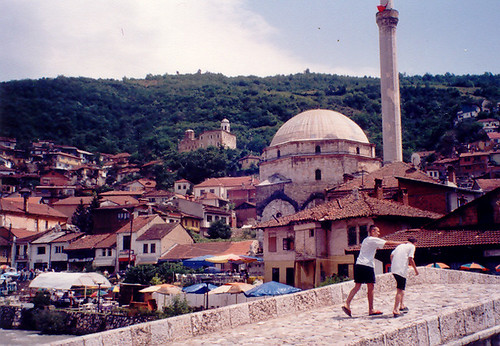 |
| Prizren, Kosovo, just after the war: against the odds, the Invisible Visible Man drove competently down a recently-bombed road near here. |
That still marks the only time in the many years since that
I’ve caused direct (as opposed to environmental) damage or injury with a car. I’ve driven many thousands of miles,
navigated cars down recently-bombed roads in Kosovo and survived an attempt by
rioting youths in Belfast
to hijack a car I was driving. Yet I can’t pretend I get on with cars the way I
do with bikes. There are few feelings of relief greater for me than the moment
I finally drop off a hire car, having damaged neither it nor anyone else during
my time in charge.
It was consequently with a sinking heart that I recognised
last week that, no, I was going to need a car to get to my meetings in Detroit . I headed to a
downtown Enterprise
rent-a-car branch with a feeling of dread.
Yet, while I was mentally prepared for many of the
depressing aspects of driving a car, the overwhelming feeling I had while
driving my Nissan Versa was not the one I'd been expecting. I found myself more struck than ever before at the sensation of being trapped in a metal box.
That sensation took a while to come over me, however. My first feeling after I climbed in, adjusted the mirrors and pulled out onto the wide, bleak expanse of E Jefferson Avenue was simple boredom.
I ’m used to pedalling hard, looking over my shoulders, standing up at points and, on faster or windier bits of a ride, putting my hands down in the drop position on my handlebars. I shift gear regularly to match my pedalling to the bike’s speed. I push hard to restart from traffic lights.
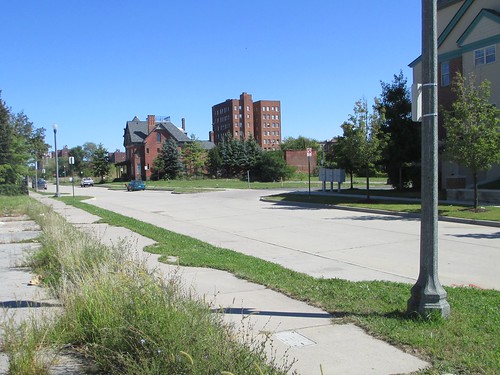 |
| A Detroit streetscape: not a great compensation for the stresses of driving |
In the car, I was reduced to turning my head a little
sometimes, glancing around in my mirrors, holding onto the steering wheel and
alternately pushing the accelerator or brake pedals. Given that the car had an
automatic transmission, there wasn’t even the modest physical activity of
engaging the clutch and moving the gear stick.
That mixture of passivity and onerous but dull responsibility puts me in touch with all the things I hate about having reached middle age. Have I checked my mirrors and blind spots before starting to signal for this manoeuvre? Have I got enough money in the right bank account for this month’s mortgage payment? It’s the diametric opposite of the youthful optimism that wells up inside me most mornings as I ride my bike.
That mixture of passivity and onerous but dull responsibility puts me in touch with all the things I hate about having reached middle age. Have I checked my mirrors and blind spots before starting to signal for this manoeuvre? Have I got enough money in the right bank account for this month’s mortgage payment? It’s the diametric opposite of the youthful optimism that wells up inside me most mornings as I ride my bike.
I’m almost overwhelmed when driving, meanwhile, by the
challenge of navigating the thing safely. The morning after I picked up the
hire car, I headed off for General Motors’ technical centre in Warren ,
outside Detroit .
The freeway on-ramp pitched me straight into the fast lane, which I couldn't escape. I was hemmed in on one side by other vehicles and by impatient other drivers
sitting right behind me. I pictured myself or one of the multiple vehicles
around me making a small mistake and our slamming into the concrete barriers
down the middle of the road. I had an almost tangible sense of how it would
feel – the jolting, the tearing of muscles, the fear, the noises.
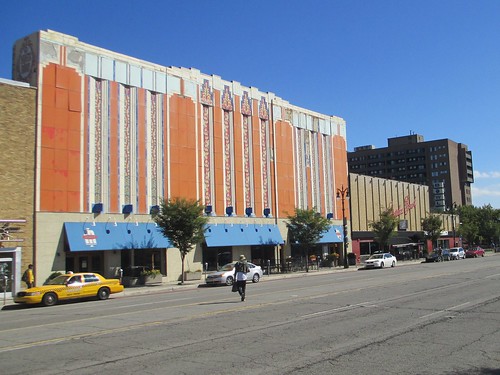 |
| Woodward Avenue in midtown Detroit: the kind of street that could have been designed - but probably wasn't - to intimidate occasional drivers like the Invisible Visible Man |
It was one of several incidents that brought home to me how
much bolder those around me are about speed, the time they need to switch lanes and so on. Although I think much of my caution is warranted, I feel within
like a small, weak, rather scared person. It doesn’t help that when I’m on work
trips I’m invariably tired, under pressure and running late. “Why did I sit up
late writing that story last night?” I find myself asking as I struggle to
shake off the cloudy fatigue in my brain. Then I notice that every time the
car’s speed drops below 60mph the satellite navigation system’s estimated time
of arrival at my destination slips a little further past the time I was meant
to be there. I push myself mentally to focus harder, press down a little on
the accelerator and carry on.
Yet the biggest shock to me on this trip was a result, I
think, of a recent change in the way I’ve been cycling. I’ve been trying more
and more to communicate with other road users, warning them of my presence,
thanking them when they’ve acted safely or pointing out when I have a traffic
light in my favour. It’s a habit I’ve developed partly in an effort to keep myself safe – but also because I want generally to communicate to others on the
road our shared humanity. Most people find it harder to behave callously
towards someone who’s made it obvious that he or she is as real and sensitive a
human being as themselves.
When I found myself pitched into that highway fast lane, by
contrast, I was struck dumb. The drivers around me could barely see me. They
were aware only of how my slow-moving, poorly-positioned car was holding them
up. My means of communicating were restricted to the use of two pathetic sets
of blinking lights saying only, “I would like to turn left” or “I would like to
turn right”. I could, I suppose, have honked the horn, as many New York City drivers do, but I never quite summoned up the aggression that seems to
require.
 |
| The Shinola bike works shop in Detroit. Can you guess where the Invisible Visible Man ends up when he feels homesick on a trip? |
I consequently wandered the freeways of south-east Michigan a little bit
lost, a little bit unsure of myself and a little bit anxious – but suffering a
kind of automotive locked-in syndrome. “I’m a Nissan Versa and I would like to
turn left” and “I’m a Nissan Versa and I would like to turn right” were the only two messages I could convey.
As a result, I had a particularly intense sense when I
returned the hire car of how the stress hormones were withdrawing from my
system. The attendant checked the car for new scratches, found none, and I
handed back the keys for the next lucky driver. I climbed instead into the
large and luxurious Jeep Grand Cherokee of the public relations executive with
whom I was to lunch.
 |
| The Brooklyn Bridge Bike Lane: I ride so fast here, it seems, I don't even recognise people I sweep past every morning. |
The relief was all the greater the next morning when, back
in New York , I returned to my normal routine,
riding across the Brooklyn Bridge into lower Manhattan . The pleasure even cancelled out my
irritation at finding building work was obstructing the “bike lane” – the space
dedicated to double-parking and deliveries – on Reade Street in TriBeCa. Conscious that other riders would probably feel less cautious than I about
squeezing through the remaining space, I nevertheless tried to wave the woman following me
through ahead of me.
Her response illustrated precisely what I’d been missing
locked up inside that car. She insisted I went ahead, saying, “You’re faster
than me.” I didn’t understand why. I looked quizzically at her
after we’d both reached the next set of traffic lights. “You’re faster than
me,” she said. “I see you ride past me every morning on the bridge.”
