It was in July 24 years ago that, riding my bike near
Airdrie, in Lanarkshire, I came across a scene that’s been in my mind a fair
amount recently. Cycling from Glasgow , my home
city, to Edinburgh ,
I passed through a village whose kerb stones were painted alternately red,
white and blue. There was bunting strung between the buildings above, also in
the colours of the union flag.
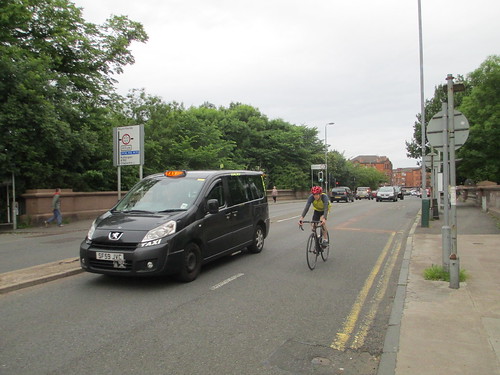 |
| A cyclist in Cathcart, on Glasgow's south side, an area with whose streets I was once intimately familiar |
Anyone familiar with central Scotland will know what I’d come
upon. The village was a stronghold of loyalism, the ideology that aligns
low-church Protestantism with fanatical loyalty to the British state. The
sentiment’s heartlands are Northern Ireland
– which loyalists are determined not to let join the Irish Republic Battle of the Boyne, a key
historic event for loyalists, in which William of Orange, a Protestant,
defeated James II, the UK ’s
last Roman Catholic king. James was driven into exile, from which he never returned.
That village has been in my mind because Scotland ’s membership of the United Kingdom ,
the state that formed me and that commands loyalists’ loyalty, is in question
in a way I’d never have imagined in 1990. In a referendum on September 18,
Scotland – the bit of the UK where I grew up, was educated, learned to ride a bike, got married and
started work – could vote to separate from England, where my wife, one of our children and I were born. I’ve spent all of my adult life since 1997 in either England , Hungary
or the United States . But my mother, sister, nephews and niece still live in Scotland .
My mind has drifted to the potential split again and again
as I’ve been riding to and from work the last few weeks. Although I’m watching
developments from 3,500 miles away, this isn’t to me an academic question of
geopolitics. It’s about a widening schism in my soul.
It’s partly because of two summers - 1989 and 1990 - that the schism feels
so painful.
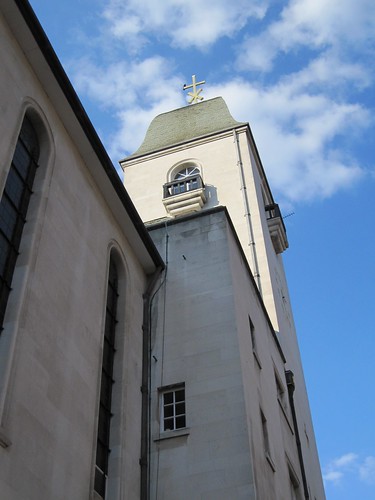 |
| St Columba's Church of Scotland in London: I was baptised here as a child, in a building that symbolises much about Anglo-Scottish identity |
I was nevertheless shaped by some distinctly Scottish
institutions. Our community was a local parish of the Presbyterian Church of
Scotland. My education taught me thoroughness and a certain toughness of
thinking. It reflected, I think, how Scotland ’s
intellectual climate is a little more dogmatic and a little less pragmatic than
England ’s.
Our school debating club and Glaswegians’ fondness for the withering, harsh put
down sharpened my sense of humour and gave it a hard edge.
But those two summers - between my second and third and third a fourth years at university - made me appreciate the country far more fully. My grandfather had to go into a nursing home in Edinburgh in summer 1989 - a process with which I helped him - and, by summer 1990, he had, sadly, died. On days
when I wasn't needed to help with grandpa or his house, I could cycle north and soon find myself riding amid lush vegetation on
the steep sides of a sea loch. I could ride south and cycle atop windswept
moors. Ride east and I was speeding towards the gentle hills and old towns of Fife . Ride west and I could zig-zag down the coast of the
Firth of Clyde. With all its flaws, the country – the miserable former mining
villages and non-descript shopping arcades as well as the baronial castles,
glittering sea lochs and twisting river valleys – felt like the landscape of
home.
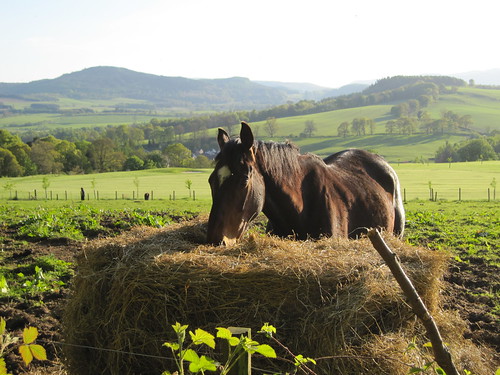 |
| The Perthshire Countryside: the kinds of hills I grew to love cycling among |
I don’t feel that the I whom those experiences in Scotland shaped need be any less a Scot now that
I start my daily bike rides in Brooklyn than when I started them on the south
side of Glasgow .
But there are certainly senses in which I’ve grown more
distant from my homeland. The yearning for the bustle of London , where I felt a substantially freer, drew me south in 1997. A still greater
wanderlust sent us from there to Hungary for four-and-a-half years.
After another nine years in London , we’ve been
in New York
for two.
 |
| A fishing boat on a Scottish sea loch: the kind of scene I discovered was just a short-ish bike ride from home. |
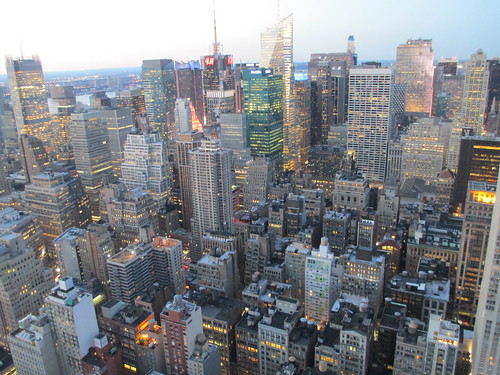 |
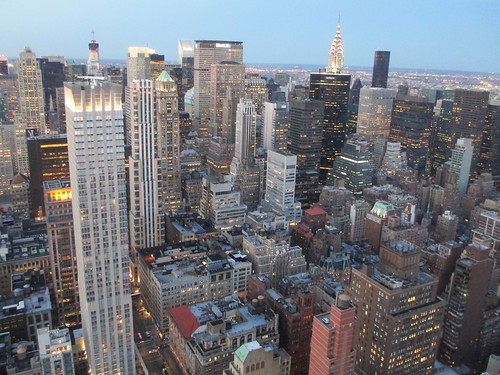
| New York City: I don't only belong amid lochs and rolling hills |
I feel, in short, a bit Scottish, a bit British – even a bit of a New Yorker. Looking back in my father’s family, I see generations who must
have felt the same. An eccentric great-great uncle of mine designed the road on
which I rode through Lanarkshire in 1990. I discovered among some family
papers that another forebear – a proud Scot – once ran a doctor’s surgery round
the corner from where we lived in south London.
My heart used to swell with pride when I worked in central Edinburgh, cycled home up the Royal Mile and pondered how David Hume, Adam Smith and other giants of the Scottish Enlightenment had worked in the same area. I also felt proud, however, when I parked my bike daily in London by the site where Shakespeare produced the first performances of many of his plays. The enlightenment thinkers, Shakespeare and geniuses from different parts of the UK have constructed an unusually rich, diverse culture that the UK's constituents share. I believe the whole is greater than the sum of the parts.
The millions of personal ties across the UK's internal frontiers, that cultural heritage and some shared British characteristics - a distrust of high-flown rhetoric, reserve with others and reluctance to make a fuss - seem to me more significant than the points that divide the peoples.
I recognise that to independence supporters these
points will seem nebulous – even perhaps a betrayal of this blog’s avowed
distaste for policy-making by reference to the gut rather than the cerebral
cortex. I do in fact have considerable policy concerns about the
prospects for an independent Scotland .
I’ve covered the affairs of many small, open economies and think the risks
facing a country dependent on oil and financial services with messy fiscal and currency affairs are substantial. It’s long been clear to me –
although Scottish nationalists have somehow persuaded people that this isn’t
the case – that Scotland ’s
public spending is buttressed by considerable transfers from the wider UK . The end of
those would cause considerable pain to ordinary Scots, especially those dependent on state benefits or working for the public sector.
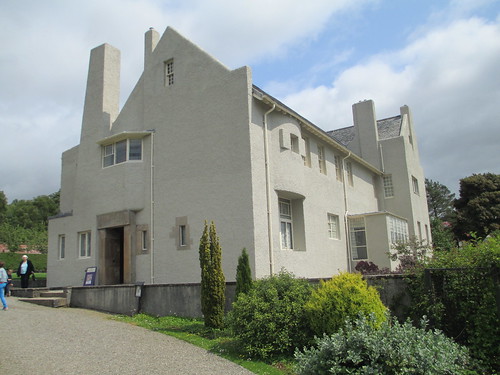 |
| Charles Rennie Mackintosh's Hill House in Helensburgh, through which I cycled on a particularly memorable ride in 1990: a blend of Scottish tradition and openness to the latest worldwide trends I profoundly admire |
I’m also sceptical that Scotland
is somehow more virtuous or nurtures better political instincts than the wider UK . The scene I
encountered in Lanarkshire is a reminder, for example, that Scotland has clung far longer than most of England or Wales to sectarianism between
Protestants and Roman Catholics. Nor is it clear to me that a free-standing Scotland is fated to be better run than the UK . In the policy
areas closest to my heart, the devolved Scottish government has built a destructive motorway across the south of Glasgow
and undertaken the mind-bogglingly inane Niceway Code “share the road”campaign. The vigorous contest of ideas that comes from belonging to a larger
state can be beneficial in making public policy operate better.
But, to me, living and cycling daily in New York City and without a vote on September
18, the biggest issues are emotional. The different bits of my background don’t
feel to me like they should be on different sides of the bitter, angry debate
that the independence referendum has stirred up. I don’t share the loyalists’ belligerent
idea of British identity but love how the UK has balanced over the years different
legal, historical, linguistic and religious traditions to make what seems to me a better whole.
If I wake on the morning of September 19th to find my fellow Scots have voted to leave that enterprise, I’ll still get on my bike, ride to work and get on with business. If I get into a dispute with a driver or chat to a fellow cyclist, I’ll still be just some big British person with an especially hard-to-understand accent. Inside me, however, part of my identity will feel torn and there’ll be a deep sorrow. I’m hoping, despite the current trend in the opinion polls, that I don’t have to feel it.
If I wake on the morning of September 19th to find my fellow Scots have voted to leave that enterprise, I’ll still get on my bike, ride to work and get on with business. If I get into a dispute with a driver or chat to a fellow cyclist, I’ll still be just some big British person with an especially hard-to-understand accent. Inside me, however, part of my identity will feel torn and there’ll be a deep sorrow. I’m hoping, despite the current trend in the opinion polls, that I don’t have to feel it.